 Sudden Valley Window
 Why Ferndale Roofs Wear Differently Than Roofs Inland
Ferndale sits close enough to Bellingham Bay and the Strait of Georgia that salt-laden air is a real factor in how a roof ages, not just a talking point. Salt air speeds up corrosion on exposed metal fasteners, flashing, and drip edges long before the shingles themselves look worn out. Combine that with Whatcom County's driving, wind-blown rain events and a moss season that can run eight or nine months out of the year, and you get roofs that develop leaks and soft spots in places a roof further inland might never have trouble with.
None of this means Ferndale homes need exotic materials or constant replacement. It means repairs have to account for how water actually moves across this specific roof, in this specific climate, instead of following a generic checklist. A patch that would hold up fine in a dry inland town can fail here within a season if it doesn't account for wind-driven rain finding its way under laps and around fasteners.
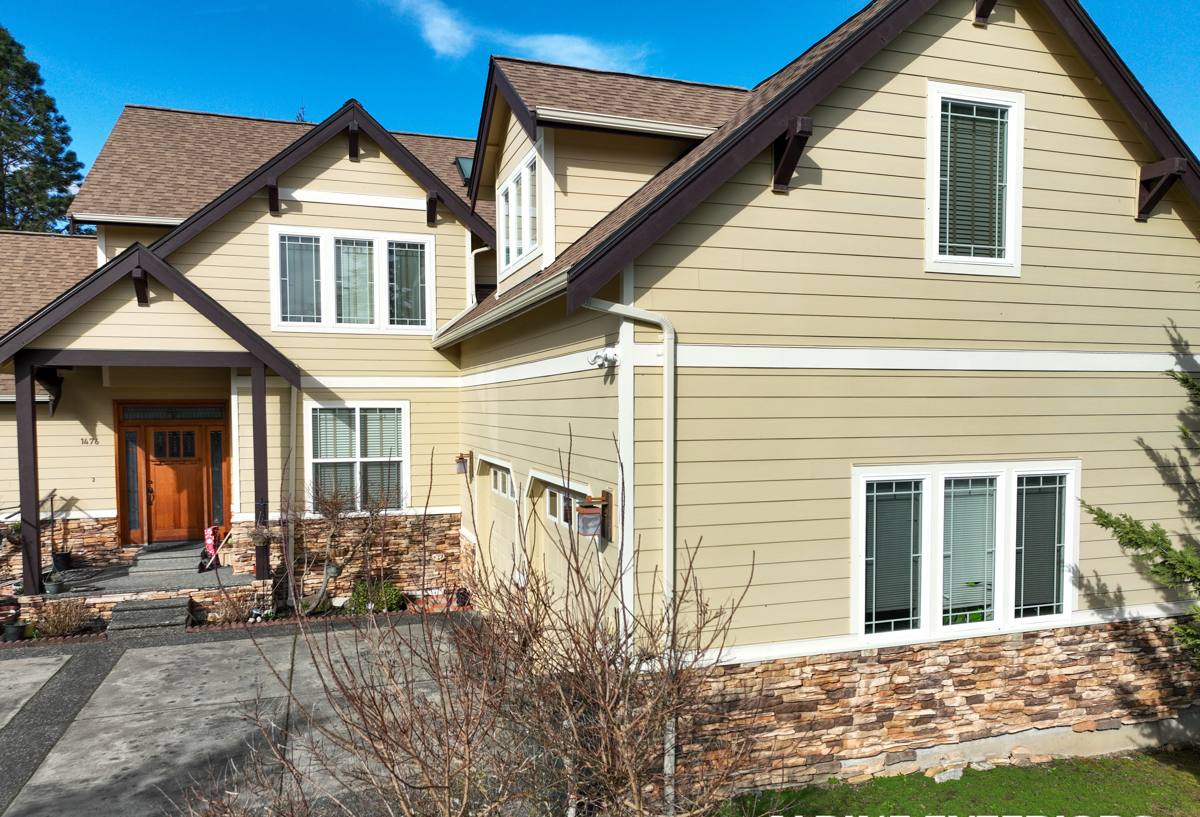
Signs a Ferndale Roof Needs Repair, Not a Full Replacement
Most roofs don't fail all at once. They fail in specific spots, usually where two roof planes meet, where something penetrates the roof deck, or where moss has been left to sit against the shingle surface. Catching these early is what keeps a repair a repair instead of turning it into a replacement.
- Dark streaking or thick moss growth concentrated on the north-facing or shaded slopes
- Granules collecting in gutters after a hard rain, especially near valleys and eaves
- Water stains on interior ceilings near chimneys, skylights, or where an addition meets the main roofline
- Flashing that looks lifted, rusted, or has visible gaps around vents and chimneys
- Shingles that are curling, cracked, or missing after a windstorm
- Soft spots underfoot in the attic decking, usually a sign moisture has already gotten past the shingles
- Rust bleed or discoloration around metal fasteners and flashing seams, common closer to the water
If a roof is showing two or three of these signs in isolated areas rather than across the whole surface, targeted repair is usually the right call. Widespread granule loss, sagging decking, or repeated leaks in different spots each year point toward a roof nearing the end of its service life, where repair stops being cost-effective.
What an Actually Correct Roof Repair Involves
Finding the Real Source of the Leak
Water rarely shows up on a ceiling directly below where it entered the roof. It travels along the underlayment, decking, and framing before finding a gap to drip through. A correct repair starts with tracing the leak back to its actual entry point, not just patching the spot where the stain appeared. This usually means checking flashing, valleys, and penetrations uphill from the visible damage before cutting into any shingles.
Flashing and Penetration Repair
Chimneys, vents, and skylights are the most common failure points on any roof, and salt air makes this worse by corroding the metal flashing around them faster than the shingles wear out. A correct repair replaces failed flashing rather than caulking over it. Caulk and roofing cement have their place as a short-term seal, but they're not a substitute for step flashing and counter-flashing done correctly, and relying on sealant alone tends to buy a homeowner a year or two before the same leak comes back.
Matching Shingles and Underlayment
A repair that uses mismatched shingle profiles or skips underlayment in the repaired section can create a weak point that fails faster than the surrounding roof. We match the existing shingle type and exposure where possible, and we don't skip underlayment just to save time on a small patch, since that underlayment is what protects the deck if wind ever drives rain up under the shingle tabs.
Moss and Debris Remediation as Part of the Repair
Moss holds moisture against the shingle surface and, over time, lifts shingle edges enough for wind-driven rain to get underneath. Any real repair in this area includes clearing moss and organic debris from the repair zone and the areas that feed water toward it, not just fixing the hole and leaving moss growing right next to the new work.
Roof Repair Materials and Methods Compared
Not every repair situation calls for the same fix. The table below covers the common options for Ferndale-area repairs and where each one makes sense.
| Repair Approach | Best Used For | Trade-Offs in This Climate |
|---|---|---|
| Spot shingle replacement | Isolated wind or impact damage, a small number of cracked or missing shingles | Works well if matching shingles are available; doesn't address underlying moss or flashing issues nearby |
| Flashing replacement | Leaks at chimneys, vents, skylights, and roof-to-wall intersections | More labor than a patch, but the only real fix for corrosion-driven leaks common near the coast |
| Valley repair | Leaks where two roof slopes meet and water volume is highest | Needs correct metal or woven valley detail; a rushed valley repair is one of the most common repeat-leak spots |
| Moss treatment and cleaning | Preventive maintenance and prepping a section before repair | Not a leak fix by itself, but skipping it shortens the life of any repair done nearby |
| Sealant/roofing cement patch | Temporary stop-gap ahead of a proper repair, or truly minor pinhole leaks | Breaks down faster in UV and salt air; we use it as a bridge, not a permanent solution |
Our Repair Process, Start to Finish
- Inspection and leak tracing. We walk the roof and attic where accessible, checking flashing, valleys, penetrations, and the areas feeding water toward any reported leak, not just the spot where damage is visible inside.
- Honest diagnosis. We tell you plainly whether what you're dealing with is a repair situation or whether the roof is close enough to the end of its life that repair money would be better spent toward a replacement.
- Written scope and rough cost range. Before any work starts, you know what's being repaired, why, and roughly what it will cost, so there are no surprises when the invoice arrives.
- Repair work. Flashing, shingles, decking, or valley work is done to match the existing roof system, using underlayment and fastening methods appropriate for wind and rain exposure in this area.
- Debris and moss clearing. We clear moss, moisture-holding debris, and old roofing material from the work area and surrounding sections that are actively feeding water toward the repair.
- Final check. We confirm the repair is sealed and draining correctly before we consider the job done, and we point out anything else on the roof worth keeping an eye on going forward.
Repair vs. Replacement: What Actually Drives the Decision
Homeowners often ask us to just fix the visible leak without a broader look, and sometimes that's the right call. Other times, a spot repair on a roof that's already failing elsewhere just delays a bigger expense. These are the factors that actually matter when deciding which way to go.
| Factor | Leans Toward Repair | Leans Toward Replacement |
|---|---|---|
| Age of roof | Roof is within its expected service life | Roof is past the age range typical for its material |
| Extent of damage | Isolated to one or two areas | Multiple leaks in unrelated locations, or widespread granule loss |
| Decking condition | Decking is solid where checked | Soft or spongy decking found during inspection |
| Moss and staining pattern | Localized, recently developed | Heavy, long-established moss across most of the roof |
| Prior repair history | First or second repair on this roof | Repeated repairs to the same or nearby areas over recent years |
We'll tell you honestly which column your roof falls into rather than defaulting to whichever job pays more. A repair that's genuinely the right call is better for your budget and for us, since it's the kind of honest work that gets us referred to the next homeowner in Ferndale.
Living With Moss and Salt Air: What Actually Helps Between Repairs
Moss Control That Doesn't Damage the Roof
Zinc or copper strips installed near the ridge let trace metal wash down the roof slope every time it rains, which discourages new moss growth over time. This is a preventive measure, not an instant fix, and it works best when paired with clearing existing moss rather than installed on top of it.
Gutter and Drainage Maintenance
Moss and granules that wash off the roof tend to collect in gutters and downspouts. Clogged gutters push water back up under the shingle edge during heavy rain, which is a common and preventable cause of edge and fascia rot in this area. Keeping gutters clear does more for roof longevity here than most homeowners expect.
Metal Fastener and Flashing Checks
Because salt air accelerates corrosion, it's worth having exposed metal fasteners and flashing checked more often here than you would on a roof further inland. Catching early rust before it perforates flashing is far cheaper than repairing the water damage that follows once it fails.
Why a Crew That Already Works Ferndale Roofs Matters
A roof repair crew that regularly works this stretch of Whatcom County already knows which failure points show up again and again around here, from corroded flashing on older homes to moss buildup on shaded north slopes. That familiarity means less time spent diagnosing and more time spent fixing the actual problem. It also means we're realistic about what materials and repair methods actually hold up against driving coastal rain and a long moss season, instead of applying a one-size-fits-all approach that might work fine somewhere drier.
Local availability matters too. A repair that's covered with a tarp and roofing cement as a temporary stop-gap needs to become a real fix before the next heavy rain, and a crew based nearby can turn that around faster than one traveling in from out of the area.
Getting a Straight Answer on Your Roof
If you're seeing moss buildup, granules in the gutters, or a leak that's shown up after a windy, wet stretch, it's worth getting an honest look before the problem spreads. We offer a free, no-pressure estimate for Ferndale homeowners — walk the roof with us, get a clear answer on what's actually going on, and decide from there with real information instead of guesswork. Use the form below to get started.