 Sudden Valley Window
 Sehome sits close enough to Bellingham Bay that salt-laden air is a fact of life for the siding on every home here, and it's paired with two other stressors that don't let up for most of the year: driving, wind-blown rain off the water and a moss season that can stretch from October well into spring. Add in the tree canopy that shades a lot of Sehome's older lots, and you get a microclimate that's harder on exterior siding than a lot of homeowners realize until they're dealing with rot, peeling paint, or moss creeping up from the bottom courses. This page covers what fiber cement siding needs to do in that environment, what a correct installation actually involves, and why we install nothing but James Hardie on the homes we work on.
What Sehome's Climate Actually Does to Siding
Whatcom County's marine climate is mild compared to a lot of the country, but "mild" doesn't mean easy on a house. Salt air accelerates corrosion on fasteners, flashing, and any metal trim that isn't properly rated or protected. Driving rain — the kind that comes in sideways during a winter storm off the Strait — finds every gap in flashing, caulking, and butt joints that wasn't detailed correctly the first time. And moss doesn't just grow on roofs; it takes hold anywhere siding stays damp and shaded, which describes a lot of north-facing walls and tree-shaded elevations around Sehome. Moss holds moisture against the siding surface, and moisture held against a substrate for months at a time is exactly what causes premature failure, no matter what the siding is made of.
None of this is unique to any one house — it's the baseline condition for exterior work anywhere near Bellingham Bay. The difference between siding that holds up for decades and siding that needs attention in five or six years usually comes down to the material and the installation, not the weather itself.
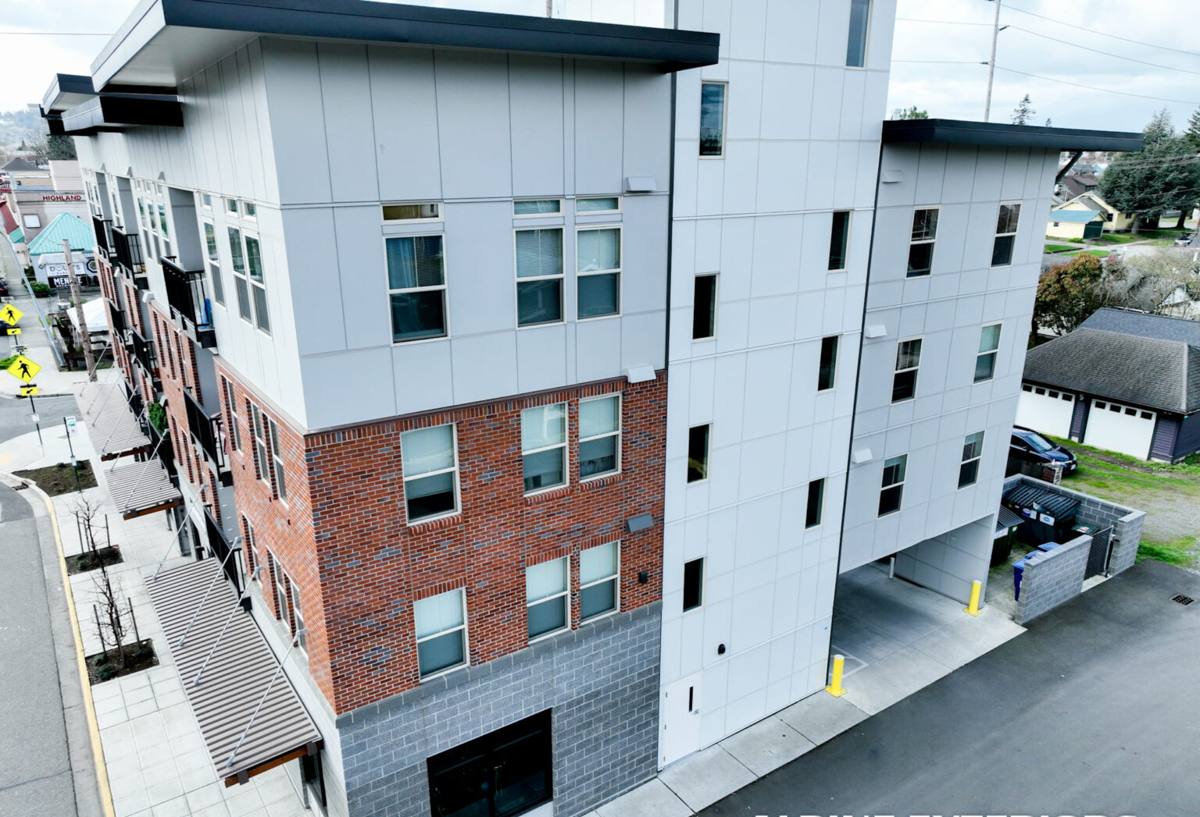
Why Fiber Cement Is the Right Material for This Environment
Fiber cement is a mix of cement, sand, and cellulose fibers, engineered to be dimensionally stable in a way that wood and wood-composite products aren't. It doesn't absorb water the way solid wood does, it doesn't feed moss and mildew the way untreated wood siding can, and it holds paint or factory finish far longer than wood because it doesn't expand and contract with every wet-dry cycle the way wood fibers do. In a climate where a wall can go from soaked to dry and back again dozens of times a winter, that stability matters more than it does in drier parts of the country.
It's also non-combustible, which is a real advantage during the dry summer stretch when wildfire smoke and regional fire risk are a concern even on the wetter side of the Cascades. And because it's dense and rigid, it holds up to wind-driven rain and impact far better than vinyl, which can crack in cold snaps and deform in direct sun.
What a Correct Fiber Cement Installation Involves
Fiber cement siding is only as good as the installation underneath it. The material is forgiving of weather, but it is not forgiving of shortcuts. A correct job on a Sehome home includes:
- Weather-resistive barrier done right — a continuous water-resistive barrier with properly lapped and taped seams, installed before any siding goes up, so bulk water that gets past the cladding still drains out instead of sitting against the sheathing.
- Rainscreen or drainage gap — a small air gap behind the siding lets any moisture that does get through dry out instead of staying trapped against the wall, which matters a lot given how long our wet season runs.
- Correct flashing at every penetration — windows, doors, hose bibs, light fixtures, and vents all need flashing detailed to shed water downward and outward, not into the wall assembly.
- Manufacturer-spec fastening — corrosion-resistant fasteners, driven at the correct depth and spacing, because over-driven or under-driven fasteners are one of the most common causes of early siding problems.
- Proper clearances — siding held up off roof lines, decks, and grade by the minimum gap the manufacturer requires, so it isn't sitting in standing water or trapped moisture at the bottom edge.
- Factory-finished joints sealed correctly — butt joints and trim seams caulked with a product rated for the exposure, not just whatever's on the truck.
Skip any one of these and you can still end up with moisture problems behind fiber cement siding, even though the board itself is doing its job. This is why installation quality matters as much as the product choice — arguably more, in a climate like ours.
Why We Install Only James Hardie
We standardized on James Hardie fiber cement for every job we take on, and we don't install LP SmartSide, vinyl, Cemplank, Allura, or bare wood siding. That's not a marketing position — it's a practical one, built around what actually holds up over time in a wet, salt-air climate like Whatcom County's.
Hardie's HZ5 product line is engineered specifically for climates that see freeze-thaw cycling and sustained moisture exposure, which describes a Pacific Northwest winter well. The ColorPlus factory finish is baked on under controlled conditions, which gives a more consistent, longer-lasting finish than field-applied paint and cuts down on the repainting cycle that wood and some composite sidings require. Hardie also backs its products with a strong, transferable limited warranty, which matters if you ever sell the house — a warranty that follows the siding gives a buyer real confidence, not just a sales pitch.
We're not going to tell you other fiber cement products are junk — most of the honest trade-offs come down to formulation consistency, finish durability, and how forgiving the product is of field conditions during install. Given what this climate does to a house over 20 or 30 years, we'd rather install one product we trust completely than offer several and hope they all perform the same.
Signs Your Sehome Home's Siding Needs Attention
A lot of siding problems in this area show up gradually, and homeowners often chalk them up to "just how houses look here" when they're actually early warning signs. Worth checking for:
- Moss or dark streaking building up on north- or shade-facing walls, especially near the bottom courses
- Paint that's peeling, bubbling, or chalking rather than just fading evenly
- Soft or spongy spots when you press on wood or composite siding near the ground or under windows
- Visible gaps or cracked caulk at butt joints, trim, and window and door edges
- Rust streaks below fasteners or metal flashing
- Warping, cupping, or boards that no longer sit flat against the wall
- Rising energy bills that could point to moisture-compromised insulation behind the siding
Any one of these on its own might be minor. Several together, especially on the sides of the house that face prevailing weather off the bay, usually mean it's worth having someone look at the wall assembly, not just the surface.
Our Process, Start to Finish
- Walk-through and assessment — we look at the existing siding, the condition of the sheathing and weather barrier where it's exposed, and the specific exposures on your lot (shade, prevailing wind, drainage around the foundation).
- Written estimate — a clear scope covering tear-off or overlay, trim work, flashing detail, and the specific Hardie products and colors for the job, with no vague allowances.
- Prep and weather barrier — removal of failing material, repair of any damaged sheathing found underneath, and installation of a continuous, correctly lapped weather-resistive barrier.
- Flashing and drainage plane — every window, door, and penetration flashed before siding goes on, with a drainage gap installed per Hardie's specifications.
- Siding installation — fastened and spaced to manufacturer spec, with attention to clearances at grade, roof lines, and decks.
- Finish and walkthrough — trim, caulking, and touch-up, followed by a walkthrough so you know exactly what was done and how to maintain it.
Cost Factors for a Sehome Fiber Cement Siding Job
Every house is different, but the line items that actually move the price on a fiber cement siding job tend to be consistent. Here's what drives cost up or down:
| Factor | Why It Matters |
|---|---|
| Tear-off vs. overlay | Removing existing siding down to the sheathing costs more upfront but lets us check for hidden moisture damage and install the weather barrier correctly — usually the right call on older homes |
| Hidden sheathing damage | Rot found once old siding comes off has to be repaired before new siding goes on; this is the most common source of change orders on older Sehome homes |
| Home size and elevation count | More wall area and more corners, dormers, and roof intersections mean more flashing detail and labor time |
| Trim and accessory work | Fascia, soffits, and trim boards done in matching Hardie trim products add cost but keep the whole exterior performing and looking consistent |
| Access and site conditions | Sloped lots, mature landscaping, and tight setbacks — common on older Sehome lots — can add scaffolding or staging time |
| Product line and profile | Lap siding, shingle-style panels, and board-and-batten all install differently and carry different material costs |
Why It Matters That We Already Work in This Area
Siding installers who work regularly around Bellingham Bay and greater Whatcom County get a practical education that doesn't come from a manufacturer's install manual alone — how much drainage gap actually matters on a shaded, moss-prone wall, which elevations take the worst of the driving rain, and how local permitting and inspection expectations run. That's the kind of judgment that shows up in the small decisions on a job: where to add extra flashing that isn't strictly required, which caulk actually holds up through a full wet season, and when a wall needs more attention than a standard install calls for. A crew that's done this work up and down the county isn't guessing at any of that.
Maintenance and What to Expect Long-Term
Correctly installed Hardie siding is low-maintenance, not no-maintenance. A rinse-down once or twice a year to knock moss and grime off shaded walls goes a long way, along with a periodic look at caulking around windows, doors, and trim joints to catch cracking before it lets water in. ColorPlus finish holds its color far longer than field-applied paint, but if a repaint is ever needed decades down the road, fiber cement takes paint well. Keep an eye on grade and landscaping too — soil, mulch, or plantings that build up against the bottom of the siding trap moisture and defeat the clearance the installation was built around, and that's one of the easiest problems to prevent and one of the most common to see on older homes in shaded, tree-heavy lots like a lot of what's in Sehome.
If your siding is showing any of the signs above, or you're planning ahead for a replacement, we're happy to come take a look and walk you through what your home specifically needs. The estimate is free, there's no pressure, and you'll get a straight answer about what your walls need and what it'll take to do the job right.