 Sudden Valley Window
 Building a Deck That Actually Holds Up in Geneva
Geneva sits close enough to Lake Whatcom and the broader Puget Sound weather pattern that a deck built to a generic national spec rarely lasts as long here as it does elsewhere. The combination of salt-laden marine air, driving rain that comes in sideways off the water, and a moss season that can run from October through May puts real stress on outdoor structures. A deck that looks fine the first summer can be hiding soft framing, trapped moisture, or slick, moss-covered boards within a few years if it wasn't built with this specific climate in mind.
We build and repair custom decks for homes in and around Geneva and the greater Sudden Valley area, and the lessons from one job carry directly into the next because the exposure conditions repeat street to street: shaded lots that never fully dry out, sloped ground near the water, and siding and framing materials that see near-constant humidity for months at a time.
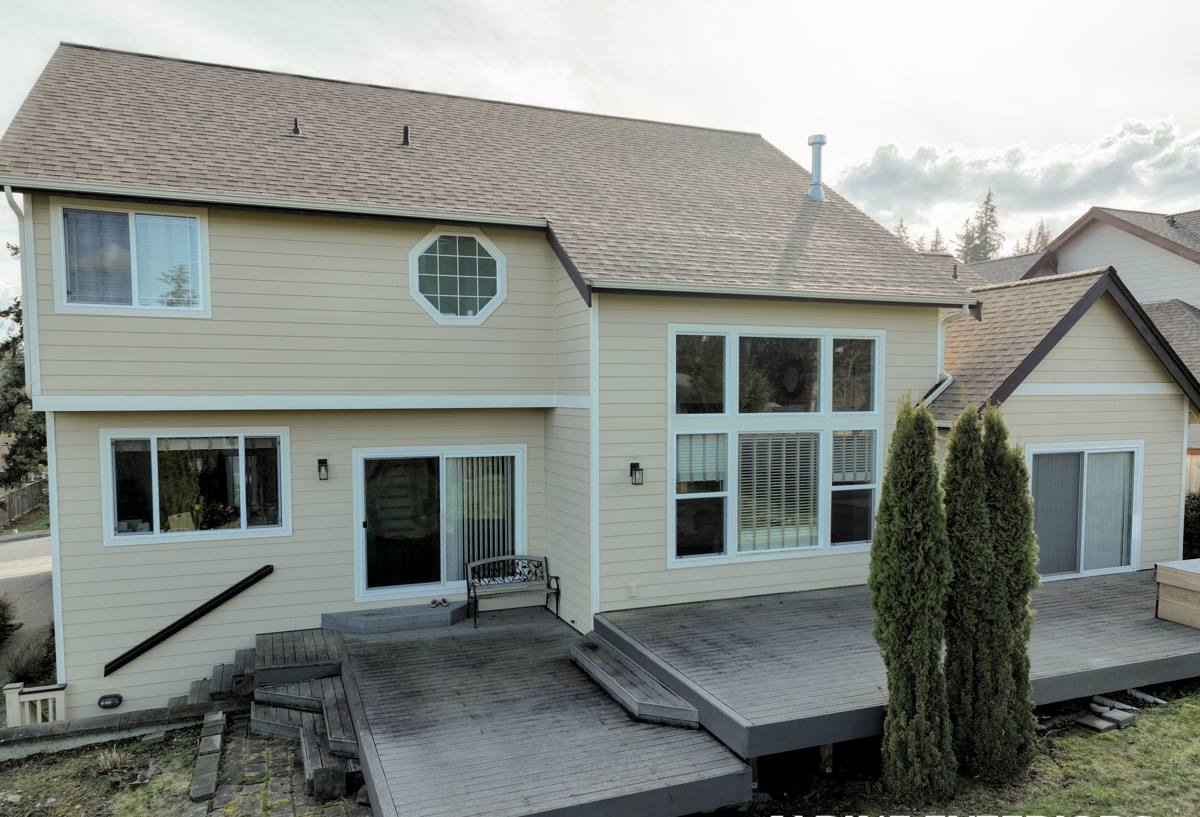
What Whatcom County Weather Does to an Outdoor Deck
Moisture That Never Fully Leaves
Unlike drier climates where a deck gets a hard freeze-thaw cycle or a long dry summer to shed moisture, Whatcom County decks often stay damp for weeks at a stretch. That constant moisture is what drives rot at ledger boards, joist hangers, and any spot where two pieces of wood sit face to face without a way to drain or breathe.
Moss and Algae Buildup
Horizontal wood and composite surfaces near tree cover or on shaded, north-facing sides of a house collect moss and algae far faster here than in most of the country. Beyond looking bad, a mossy deck surface holds water against the board and becomes genuinely slick and dangerous underfoot, especially on stairs.
Salt Air and Fastener Corrosion
Homes closer to the water pick up salt-laden air that accelerates corrosion on standard fasteners and hardware. Screws, joist hangers, and structural connectors that aren't rated for coastal exposure can start rusting and weakening years before the decking itself shows any wear, which is a common cause of decks that fail from the inside out.
What a Correctly Built Deck Involves
Framing and Substructure
The framing is where a deck's real lifespan is decided, and it's the part homeowners see least. Proper joist spacing for the decking material chosen, correctly flashed ledger attachment to the house, and a footing depth and spacing suited to local soil and frost conditions all matter more in a wet climate than in a dry one, because any shortcut here shows up as rot or movement within a few seasons instead of a few decades.
Ledger Flashing and Water Management
The ledger board — where the deck attaches to the house — is the single most common failure point on decks in this region. It needs proper flashing that directs water away from the house wall rather than trapping it behind the ledger, plus a gap or drainage path so moisture doesn't sit and soak in. This is invisible once the deck is finished, which is exactly why it's worth asking a contractor to explain how they handle it before work starts.
Decking Surface and Fastening
Whatever surface material is chosen, the fasteners and hidden hardware need to be rated for wet, coastal-influenced conditions — stainless steel or coated fasteners built for exterior and marine-adjacent use, not standard interior-grade hardware. Board spacing also needs to allow for drainage and airflow underneath so the deck can actually dry out between rain events instead of staying saturated.
Comparing Decking Materials for a Geneva Property
| Material | Moisture & Moss Resistance | Maintenance | Typical Lifespan | Relative Cost |
|---|---|---|---|---|
| Pressure-treated wood | Good if sealed and maintained; prone to moss without upkeep | Annual cleaning and periodic re-sealing | 10–15 years | Lowest |
| Cedar | Naturally rot-resistant but still needs sealing in this climate | Regular cleaning, re-staining every few years | 15–20 years | Mid-range |
| Composite decking | Excellent moisture resistance; still needs occasional cleaning to prevent surface moss | Low — periodic washing, no sealing | 25–30+ years | Higher upfront |
| PVC decking | Best moisture and moss resistance of common options | Lowest — occasional washing | 30+ years | Highest |
There's no single right answer here — a lot depends on budget, how shaded the lot is, and how much upkeep a homeowner actually wants to do. What matters is choosing with eyes open rather than defaulting to whatever's cheapest, since the maintenance burden of a wood deck in a shaded, damp Geneva lot is real and ongoing.
Problems We Commonly Find on Existing Decks in This Area
- Rot at the ledger board where flashing was missing, damaged, or never properly installed
- Undersized or improperly spaced joists that flex or bounce underfoot
- Rusted fasteners and joist hangers on decks closer to the water, from hardware not rated for salt-influenced air
- Heavy moss and algae buildup on shaded stairs and landings, creating a slip hazard
- Footings that have shifted or settled on sloped lots without adequate drainage around them
- Railings that have loosened because post attachment wasn't engineered for the load
Most of these aren't visible from a quick look at the deck surface. They show up during a close inspection of the framing, connections, and ledger — which is exactly what we walk through before quoting any repair or rebuild.
Our Process, From Estimate to Finished Deck
- On-site assessment. We look at the existing structure (if there is one), the slope and drainage of the lot, sun and shade exposure, and how the deck will tie into the house.
- Design and material selection. We walk through decking material options, layout, and any code or permit requirements specific to the property before finalizing a plan.
- Written estimate. A clear scope of work and price, so there's no ambiguity about what's included — framing, fasteners, decking, railing, and finish work.
- Permitting. Where a permit is required, we handle the submission and inspection scheduling as part of the job.
- Construction. Framing first, with proper flashing and drainage detailing, followed by decking, railings, and stairs.
- Final walkthrough. We go over the finished deck together and cover basic care so it holds up through its first wet season and beyond.
Design Considerations Specific to Geneva Lots
Slopes and Elevation
A number of properties around Geneva and the Lake Whatcom shoreline sit on sloped ground, which affects footing depth, deck height, and sometimes whether a permit review looks at more than just the deck itself. Getting the substructure engineering right on a sloped lot matters more here than on a flat one.
Tree Cover and Sun Exposure
Heavily wooded lots hold moisture longer and see more moss, which can influence which decking material makes sense and whether periodic trimming to open up sun exposure is worth discussing as part of the overall plan.
Neighborhood Standards
If a property falls within an HOA or architectural review area, deck design, materials, and even railing style may need approval before construction starts. We factor that into the timeline rather than treating it as an afterthought.
Deck Maintenance Checklist for Whatcom County Homeowners
- Sweep debris and standing leaves off the deck surface regularly, especially in fall
- Clean moss and algae off boards and stairs at least once a year, more often on shaded sections
- Check and clear drainage gaps between boards so water isn't pooling
- Inspect the ledger board area annually for signs of moisture staining or soft wood
- Re-seal or re-stain wood decking on the manufacturer's recommended schedule, not just when it looks faded
- Check railing posts and stair connections for looseness each spring
- Look at fasteners and visible hardware periodically for early signs of rust
Why Hire a Crew That Already Works in Geneva
A deck built for a dry climate and a deck built for this one aren't the same project, even if they look identical from the street. Flashing details, fastener selection, joist spacing, and material choice all shift when the deck is going to spend half the year wet and shaded. Crews that already work in Geneva and the surrounding Sudden Valley area have seen which shortcuts fail here — often because they've been called back to fix decks built by contractors who treated this like any other job site. That local pattern recognition, more than any single technique, is what separates a deck that needs major repair in eight years from one that's still solid in twenty-five.
If you're planning a new deck or need an honest look at one that's showing its age, we're happy to come out, walk the site, and give you a straightforward estimate — no pressure, no obligation. Just fill out the form below and we'll get in touch.