 Sudden Valley Window
 Siding Installation for Geneva, Serviced by Our Sudden Valley Crew
Geneva sits close enough to our Sudden Valley base that it's part of our regular route, not a special trip. That matters more than it sounds like it should. Siding is one of those jobs where local familiarity shows up in small decisions — how much rain-screen gap to leave, which way the prevailing weather hits a given wall, how long a north-facing elevation stays damp after a storm passes. A crew that works this corner of Whatcom County every week makes those calls without guessing.
This page covers one job in one area: siding installation for homes in and around Geneva. We're not going to give you a generic rundown of siding types or a company overview. We're going to walk through what the local climate does to a home's exterior, what a correctly installed system needs to hold up to it, and how we handle the work start to finish.
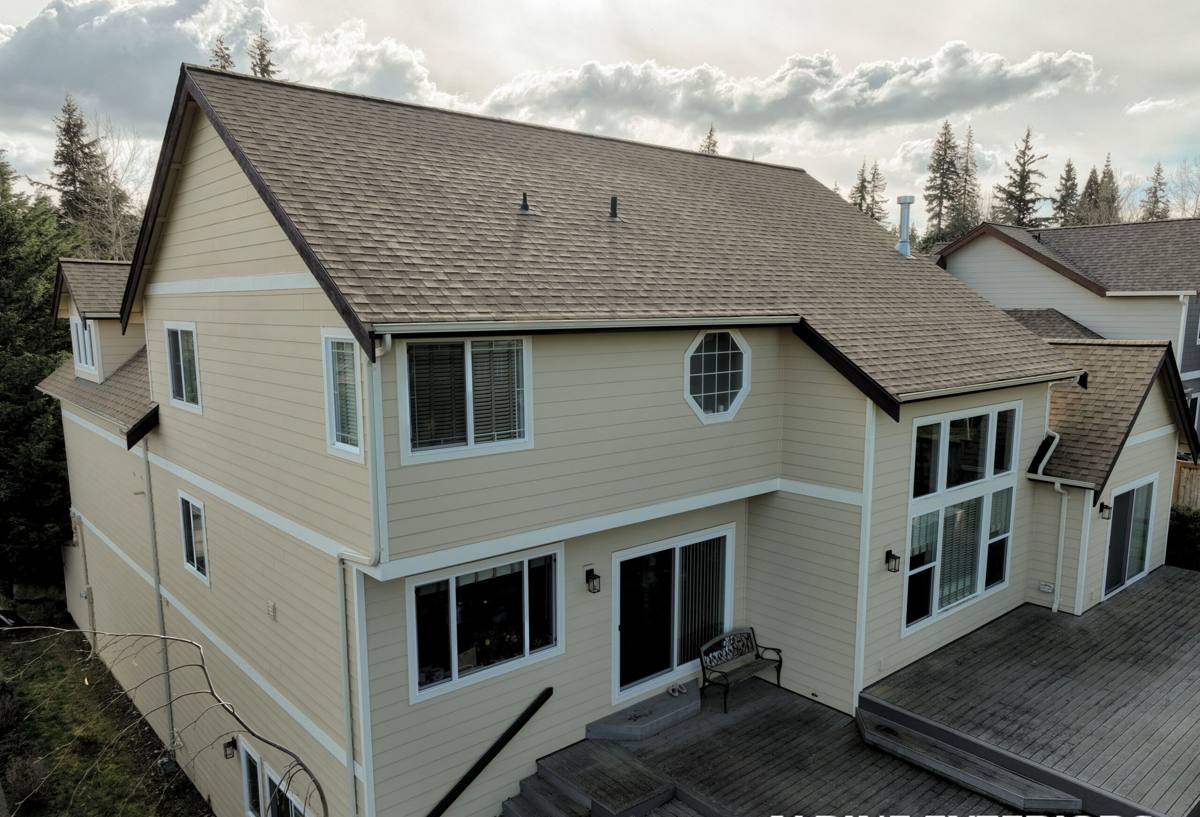
What Whatcom County's Climate Does to Siding
Homes in this part of Washington deal with a specific combination of stresses that inland or drier-climate siding advice doesn't account for. None of it is dramatic on any single day — it's the accumulation over years that separates a siding job that lasts from one that doesn't.
Salt-laden marine air
Whatcom County sits under the influence of Salish Sea weather systems, and that marine air carries salt content that accelerates corrosion on fasteners, flashing, and any exposed metal trim. Siding materials and hardware that aren't rated for it corrode faster than homeowners expect, sometimes staining the siding face itself before the panels show any other wear.
Driving, wind-pushed rain
This isn't gentle, straight-down rain. Pacific Northwest storms push moisture sideways into wall assemblies, which means the water management behind the siding — the weather-resistive barrier, flashing details, and drainage gap — often matters more than the siding material itself. Installation quality determines whether that water stays out or finds its way behind the cladding.
A long moss and mildew season
Heavy tree cover, shade, and near-constant humidity for much of the year create ideal conditions for moss, algae, and mildew growth on north- and west-facing walls in particular. Some siding materials resist this better than others, and finish quality plays a direct role in how much upkeep a homeowner is signing up for.
What a Correct Siding Installation Actually Involves
"Siding installation" gets treated as a simple swap-out job more often than it should. Done right, it's a system, not just a product nailed to the wall. The steps that actually determine longevity in this climate:
- Removal and inspection of the old siding and sheathing — this is where hidden rot, prior water intrusion, or failed flashing gets found, before it's covered up again.
- A proper weather-resistive barrier, installed shingle-style so water sheds outward and down, not into seams.
- A drainage gap or rain-screen behind the siding so any moisture that gets past the outer layer can dry out instead of sitting against the sheathing.
- Correct flashing at every penetration — windows, doors, hose bibs, light fixtures, anywhere the wall plane is interrupted.
- Fastener selection and placement rated for coastal-influenced climates, driven to the manufacturer's exact spec, not just "snug."
- Proper clearances at grade, roof lines, and decks so siding isn't sitting in standing moisture or trapped debris.
Skip any one of these and the siding can look fine for a few years while the wall assembly behind it is already failing. That gap between "looks fine" and "is fine" is exactly where a lot of Northwest siding problems start.
Why We Install James Hardie Fiber Cement and Nothing Else
We made a deliberate call to stop installing vinyl, LP SmartSide, Cemplank, Allura, and primed wood or cedar siding, and to install James Hardie fiber cement exclusively. That's not a sales position — it's a standard we hold because of what we've seen these products do, and not do, in exactly this climate.
Where the alternatives fall short here
Vinyl expands and contracts with temperature swings and can warp or crack under impact; it also doesn't hold paint, so color choice is locked in at installation. Engineered wood products like LP SmartSide perform well in many climates but are wood-based, which means edge sealing and ongoing maintenance matter more in a wet climate than manufacturers' marketing tends to emphasize. Primed spruce and cedar are honest, traditional materials, but they demand a maintenance schedule — painting, sealing, moisture monitoring — that most homeowners underestimate until they're several years in. Other fiber cement brands like Cemplank and Allura are legitimate products, but we standardized on one system so our crew's installation training, flashing details, and warranty support are consistent on every job, not adapted product-by-product.
What Hardie gets right for this area
James Hardie fiber cement is non-combustible, dimensionally stable across our temperature and humidity swings, and finished at the factory with ColorPlus technology — a baked-on finish that resists fading and chipping far better than field-applied paint. The HZ5 product line is engineered specifically for cold, wet climates like ours, addressing moisture and freeze-thaw behavior at the material level rather than relying on maintenance to compensate. It also carries a strong transferable warranty, which matters to resale in a market where buyers are increasingly asking what the siding is and when it was done.
Our Process for Geneva Jobs
- On-site assessment — we look at wall orientation, tree cover, drainage, and existing siding condition before quoting anything.
- Written estimate with material, labor, and any sheathing or flashing repair called out separately, so there are no surprise line items once the walls are opened up.
- Tear-off and inspection of the substrate, with photos and a direct conversation if we find rot or prior water damage before we cover it back up.
- Weather barrier, rain-screen, and flashing installation to manufacturer and code specification.
- Hardie panel or plank installation, fastened and finished per James Hardie's published requirements — this is what keeps the warranty valid.
- Final walkthrough with the homeowner before we consider the job done.
Moss, Moisture, and Realistic Maintenance
No siding material makes moss impossible in a shaded, humid corner of Whatcom County — that's a function of sun exposure and tree cover more than the cladding itself. What correct material and installation choices change is how much the moss and moisture actually cost you over time. A factory-finished, non-combustible fiber cement panel installed with a working drainage gap sheds surface growth more easily and doesn't rot, swell, or delaminate the way wood-based products can if moss holds moisture against the surface. Homeowners should still expect to rinse siding periodically and keep gutters and downspouts clear — that upkeep doesn't go away, but the consequences of skipping a season or two are far less severe with the right system underneath.
Cost Factors on a Geneva Siding Job
| Factor | Why It Moves the Price |
|---|---|
| Home size and wall complexity | More corners, gables, and dormers mean more cutting, flashing, and labor time |
| Existing sheathing condition | Rot or water damage found during tear-off adds repair scope before new siding goes on |
| Siding profile chosen | Lap, panel, and shingle-style Hardie products differ in material and install time |
| Trim and accessory work | Fascia, corner boards, and window trim replacement add scope beyond field siding |
| Site access | Steep grades, limited driveway access, or heavy landscaping around the home affect labor and staging |
| Story height | Two-story walls require scaffolding or lift equipment, which adds cost over single-story work |
We give homeowners a real number after seeing the home, not a phone estimate — too many of these factors only show up once we're looking at the actual walls.
Signs Your Current Siding Already Needs Attention
- Soft or spongy spots when you press on the siding, especially near the bottom courses
- Paint that's peeling or bubbling in a pattern that follows seams or panel edges
- Persistent moss or dark staining that comes back within weeks of cleaning
- Visible gaps, warping, or buckling panels, particularly on sun-exposed or wind-exposed walls
- Rising energy bills without another clear cause, which can point to a compromised wall assembly
- Musty smell along interior walls that share an exterior wall with visible siding wear
Any one of these on its own isn't necessarily an emergency, but they're worth a professional look before the next wet season.
Why Hiring a Crew That Already Works Geneva Matters
Siding crews that split their time across a wide service area learn a region's weather in generalities. A crew that works Geneva and Sudden Valley on a regular basis learns it in specifics — which walls stay wet longest after a storm, where moss shows up first each year, how the tree canopy shifts sun exposure through the seasons. That knowledge shows up in flashing details, drainage gap sizing, and product line selection, not just in showing up on time. It also means a shorter path to a warranty visit or a question a year or two after the job, since we're not driving in from across the county.
If you're weighing a siding project on a Geneva home, we're glad to take a look and give you a straight, no-pressure estimate — no obligation, just an honest read on what your walls actually need.