 Sudden Valley Window
 Building New in Cordata? Get the Window Install Right the First Time
New construction is the one point in a home's life when window installation is genuinely easy to do right — the walls are open, the flashing sequence isn't fighting fifteen years of paint and caulk, and there's no old window to fight out of a rotted opening. That window of opportunity (no pun intended) closes fast once siding and interior finish go on. If you're building or framing a home in Cordata, the choices your builder or window contractor make now — product selection, flashing method, sealant, drainage plane integration — are the choices you'll live with for the next 30-plus years.
Cordata sits in the part of Whatcom County that gets the full package: marine air off the Salish Sea, long stretches of driving rain that comes in sideways more often than straight down, and a moss season that can run from October well into spring. None of that is exotic weather. But it does mean a window install that would be "fine" in a drier inland climate can fail here — not in year one, but in year eight or ten, quietly, behind the trim, where nobody looks until there's a stain on the drywall.
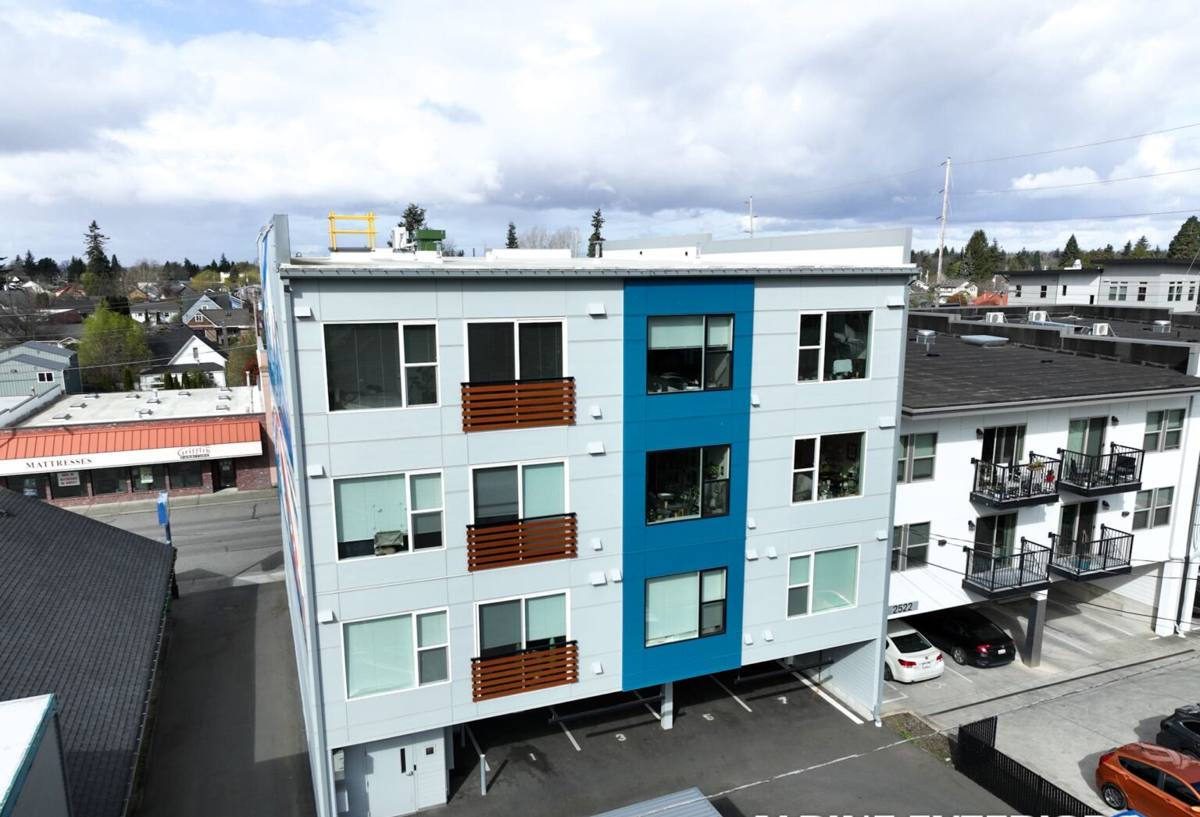
What Cordata's Climate Actually Demands From a New Window Install
Salt Air and Metal Fatigue
Cordata isn't oceanfront, but Whatcom County's proximity to Bellingham Bay and the Salish Sea means airborne salt does travel inland, especially on windier weeks. Salt-laden moisture accelerates corrosion on exposed fasteners, cheap flashing tape, and low-grade hardware. On a new build, this is solved cheaply and permanently at install time: corrosion-resistant fasteners, quality flashing membrane, and hardware rated for coastal-adjacent exposure. Trying to fix corroded hardware after the siding is up costs many times more.
Driving Rain and Wind-Driven Water
Whatcom County storms frequently push rain horizontally, not just down. That means water is testing your window's weakest point — the rough opening seal — far more aggressively than in calmer climates. A window that's simply "caulked in" will eventually let water past the sill pan, especially during a new build's first few wet seasons before the structure has fully settled. Correct new-construction installs use a sill pan (site-built or manufactured), back-dam detail, and properly lapped flashing tied into the weather-resistive barrier — so any water that does get past the window sheds back outside the wall, not into the framing.
Moss, Mildew, and Prolonged Dampness
Long wet seasons keep exterior surfaces damp for extended stretches, which is exactly the environment moss and mildew need. This matters at window sills and trim details more than most homeowners expect — any place water can pool or wick will eventually grow something green. New-construction work lets us slope sills correctly and choose trim materials and sealant systems that shed water instead of holding it, heading off the moss and staining problems that plague poorly detailed builds a few years down the road.
What a Correct New-Construction Window Job Involves
A lot of what separates a durable install from a problem install happens before the window ever gets set in the opening. Here's the sequence we follow on Cordata builds:
- Rough opening check. Confirm the opening is square, plumb, and sized correctly to the window unit's actual dimensions — not just the framer's estimate.
- Sill pan flashing. Install a sloped sill pan with a back dam, so any water that gets behind the window drains back out over the exterior weather-resistive barrier instead of pooling on the framing.
- Jamb and head flashing, properly lapped. Water-resistive barrier and flashing tape are integrated in the correct shingle-lap order — head flashing goes over the barrier above it, never tucked under in a way that traps water.
- Set the window level, plumb, and square — and fastened per the manufacturer's schedule, not "close enough."
- Insulate the gap between window frame and rough opening with a low-expansion foam or backer rod plus sealant — never packed tight with fiberglass, which does nothing to stop air and moisture movement.
- Interior and exterior air sealing at the frame perimeter, keeping the building's air barrier continuous.
- Exterior trim and sealant installed with the correct sealant joint geometry so caulk lines actually last, not crack out in two winters.
Product Selection for Cordata New Builds
New construction gives you a real choice of window products, since you're not constrained by an existing frame size. For this climate, we steer builders and homeowners toward:
- Vinyl or fiberglass frames with welded (not mechanically fastened) corners — fewer seams for water to find.
- Dual-pane, low-E glass as the baseline; triple-pane where budget allows, especially on north- and west-facing walls that take the brunt of Whatcom County wind and rain.
- Factory-applied nailing fins with a continuous, uninterrupted flange — this is what the flashing sequence actually seals against, so a flawed fin design undermines everything downstream.
- Corrosion-resistant fastener and hardware packages, given the salt-air exposure discussed above.
We install a range of reputable window brands, and we're happy to work within whatever product line a builder has already specified. Where we push back is on installation shortcuts, not brand names — a good window installed with a bad flashing sequence will still fail, and a modest window installed correctly will outperform it.
Frame Material Comparison for New Construction
| Material | Moisture Behavior | Maintenance | Typical Fit for Cordata New Builds |
|---|---|---|---|
| Vinyl | Won't rot or corrode; relies on quality seals | Low — occasional cleaning | Strong value option, good for most new builds |
| Fiberglass | Very stable, minimal expansion/contraction | Low | Good upgrade for exposed elevations, longer service life |
| Wood-clad | Vulnerable if cladding seal fails; needs perfect flashing | Higher — cladding joints need monitoring | Fine for sheltered elevations; riskier on rain-exposed walls without meticulous detailing |
| Aluminum | Conducts cold, can condense; corrodes without coating | Moderate | Generally not our first recommendation for this climate unless thermally broken |
Our Process for Cordata New-Construction Projects
We coordinate directly with builders and framers so window install lands at the right point in the schedule — after the weather-resistive barrier is up, before siding starts. Typical flow:
- Site visit or plan review to confirm window schedule, rough opening sizes, and product selection
- Material delivery and staging timed to the framing schedule
- Sill pan and flashing install, inspected before the window goes in
- Window set, leveled, fastened, and flashed per manufacturer instructions
- Interior/exterior seal and trim-ready handoff back to the builder
- Final walkthrough — we point out anything the framer or siding crew needs to know about the window details before they close the wall
Cost Factors on New-Construction Window Jobs
New-construction window pricing varies a lot by house size, window count, and product tier, so we won't throw out a number that doesn't mean anything without seeing the plans. What actually moves the price:
| Factor | Why It Matters |
|---|---|
| Number and size of openings | Labor and material scale directly with window count and unit size |
| Frame material and glass package | Vinyl vs. fiberglass vs. wood-clad, dual- vs. triple-pane |
| Elevation exposure | Walls taking direct driving rain get extra flashing attention and sometimes upgraded sealant systems |
| Access and scheduling | Coordinating tightly with framing and siding crews affects labor efficiency |
| Custom or specialty shapes | Non-standard sizes, bays, or picture windows require custom flashing detail work |
We give a real, itemized number after seeing the plans or the framed structure — not a guess over the phone.
Why a Crew That Already Works Cordata Matters
Whatcom County's building department, inspection expectations, and typical framing practices are things a local crew already knows cold. More importantly, we've seen what actually goes wrong on builds in this specific corner of the county — where wind-driven rain hits hardest, which elevations grow moss first, which flashing shortcuts show up as leaks two winters later. That's not something you get from a national warranty booklet; it's from doing the work here, repeatedly, and fixing the installs that were done wrong the first time.
A crew based elsewhere isn't going to install a window differently on paper — the manufacturer's instructions are the same everywhere. The difference shows up in judgment calls: how much extra attention a west-facing wall gets, whether the sill pan detail accounts for how hard this area's storms actually drive water sideways, whether the crew has seen enough Whatcom County failures to know what to avoid.
Get a Straight Answer Before You Frame the Next Wall
If you're planning a new build in Cordata, the best time to talk with us is before the rough openings are even framed — plan review, product selection, and scheduling are all easier to get right early. If the framing's already up, we're glad to look at what's there and flag anything worth adjusting before siding closes the wall for good. Reach out for a free, no-pressure estimate — we'll walk the plans or the site, tell you honestly what your build needs, and give you real numbers to work with.