 Sudden Valley Window
 Why Roofs Around Lake Whatcom Wear Out Faster Than You'd Expect
Lake Whatcom sits in a pocket of Whatcom County that gets more moisture exposure than a lot of homeowners realize. The same marine air that moves in off the Sound and settles over the county doesn't stop at the shoreline — it works its way up into the hills around the lake, and it brings damp, mild air that rarely fully dries out for weeks at a stretch. Add in the tree cover that surrounds most of the Sudden Valley area, and you've got a roof climate that's harder on materials than a drier inland region would be.
The Moss and Algae Problem
Shade from conifers, north-facing roof planes, and long stretches of overcast, humid weather are exactly what moss and algae need to take hold. Once moss gets a foothold in a shingle's texture or under the tabs, it holds water against the roofing material far longer than rain alone ever would. That constant dampness is what actually causes the damage — not the moss itself, but the wood, granules, and fasteners staying wet underneath it for months at a time.
Wind-Driven Rain and Ice
Fall and winter storms here tend to bring rain sideways as much as down, which pushes water into laps, flashing seams, and nail penetrations that would stay dry in a straight downpour. Add the occasional freeze after a wet stretch and you get expansion in whatever moisture already worked its way into a seam or a soft spot — which is how a small, ignorable leak in November becomes a stained ceiling by February.
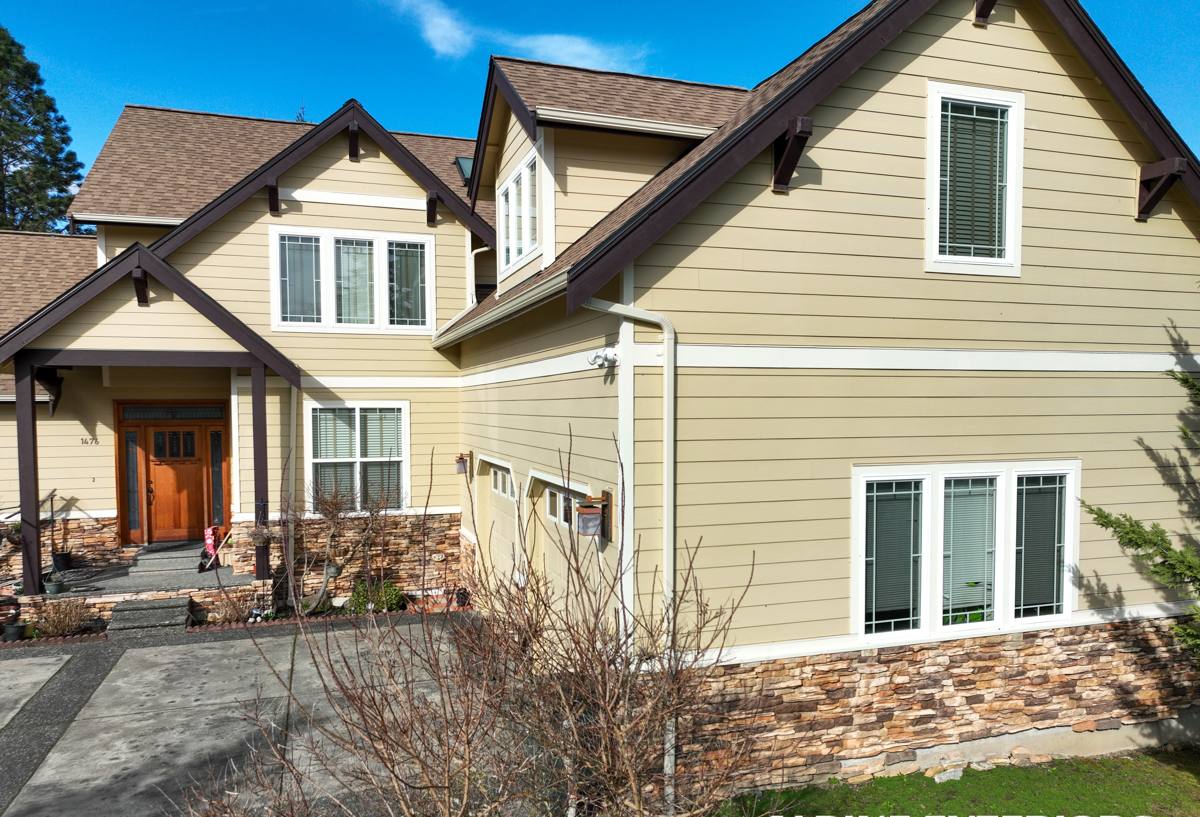
Signs a Lake Whatcom Roof Needs Repair
Most roof problems in this area show up gradually, not as a sudden failure. Here's what we'd want you to call about before it turns into an interior repair:
- Dark streaking or a green-black cast to shingles, especially on shaded or north-facing slopes
- Moss that's thick enough to feel spongy underfoot if you were to walk the roof
- Granules collecting in gutters or at the base of downspouts
- Curling, cupping, or lifted shingle tabs, particularly on older asphalt roofs
- Soft or discolored spots on interior ceilings after a heavy rain event
- Daylight visible through the roof deck from inside an attic
- Rusting, lifted, or separated flashing around chimneys, skylights, or vent pipes
- Gutters or valleys that stay wet or clogged with debris well after rain has stopped
Any one of these on its own isn't necessarily an emergency, but they're worth a look before the next wet season sets in — repair work is almost always cheaper and less disruptive than the water damage that follows a delay.
What a Correct Roof Repair Actually Involves
Finding the Real Source of a Leak
Water doesn't always show up where it enters. It can travel along a rafter or sheathing seam and drip out several feet from the actual breach, which is why a repair that just patches the visible stain often fails to fix anything. A proper repair starts by tracing the path — checking flashing, underlayment, and the roof deck itself, not just the shingle surface — so the fix addresses the actual entry point instead of the symptom.
Matching Materials to What's Already on the Roof
A patch that doesn't match the surrounding roofing in weight, profile, or age tends to fail early, either because it doesn't shed water the same way or because it's visibly and physically a different material trying to bond to an old one. We match shingle type, exposure, and fastening pattern to what's already installed, and where an exact match isn't available anymore, we use the closest equivalent and place it where the mismatch will matter least.
Common Roof Repairs We Handle Near Sudden Valley
| Repair Type | Typical Cause Around the Lake | What's Involved |
|---|---|---|
| Flashing repair or replacement | Wind-driven rain working under aged or improperly sealed flashing at chimneys, skylights, and walls | Remove and re-flash the penetration, replace underlayment beneath it, reseal with appropriate materials |
| Moss and debris removal with treatment | Shaded, tree-covered lots holding moisture against the roof surface | Soft-wash removal, gutter and valley clearing, application of a moss-inhibiting treatment |
| Shingle replacement (spot repair) | Wind lift, granule loss, or aging on a limited section of roof | Remove damaged shingles, inspect and repair decking if needed, install matched replacement shingles |
| Valley and seam repair | Heavy water volume concentrating in valleys during storm events | Rework the valley liner or metal, reseal seams, confirm proper water shedding |
| Deck and sheathing repair | Prolonged moisture exposure from an undetected leak | Cut out and replace compromised decking, address the leak source, restore roofing over the repaired section |
Costs for these range widely depending on roof pitch, access, how much decking (if any) needs replacing, and how the existing material has held up — a simple flashing reseal is a fraction of the cost of a repair that involves rotten sheathing. We give you a firm number after we've actually looked at the roof, not a phone estimate.
Our Process for a Roof Repair Visit
Inspection
We start on the roof itself, not just the ceiling stain that prompted the call. That means checking flashing, valleys, vent boots, and the general condition of the roofing material, along with a look in the attic where access allows, so we can see how far moisture has traveled and whether there's hidden decking damage.
The Repair
Once we know what's actually wrong, we walk you through what needs to happen and why, then do the work — removing and replacing only what's damaged, matching materials where we can, and making sure flashing and seams are properly lapped and sealed rather than just caulked over.
Cleanup and Follow-Up
We clear debris, old shingles, and moss buildup from the roof and gutters as part of the job, not as an upsell. If we spot something else developing during the repair — a soft spot near the repaired area, aging flashing elsewhere on the roof — we'll point it out honestly, even if it's not something that needs attention yet.
Repair or Replace? How to Tell
Not every roof problem around the lake means a full replacement, and we're not going to tell you it does. The honest dividing line usually comes down to how much of the roof is affected and how the underlying decking has held up.
| Factor | Leans Toward Repair | Leans Toward Replacement |
|---|---|---|
| Extent of damage | Isolated to one section, flashing point, or valley | Widespread across multiple slopes |
| Roof age | Well within its expected service life | Near or past typical lifespan for the material |
| Decking condition | Solid, dry sheathing under the affected area | Soft, rotted, or repeatedly repaired decking |
| Moss/algae history | First occurrence or recently treated | Chronic, recurring buildup despite treatment |
If we're standing on your roof and repair is genuinely the right call, that's what we'll recommend — a repair that's done correctly can add years of reliable service without the cost of a full tear-off.
Keeping Moss and Moisture From Coming Back
A repair holds up a lot longer with a little regular attention, especially on tree-shaded lots typical of this area.
- Keep gutters and valleys clear of needles and leaf debris, especially heading into fall storm season
- Trim back overhanging branches where practical to reduce shade and debris buildup on the roof
- Have moss growth treated before it thickens rather than after it's visibly matted
- Check flashing and seals annually, particularly around chimneys and skylights
- Address small leaks as soon as they're noticed rather than waiting for the next dry stretch
Why Hire a Crew That Already Works This Area
Roofing around Lake Whatcom isn't quite the same job as roofing in a drier, more open part of the county. Knowing which slopes hold moss, how tree cover affects a given roof, and what flashing details tend to fail first in this climate comes from doing the work here repeatedly — not from a general checklist. That local familiarity also matters for logistics: some neighborhoods around the lake, including gated communities with their own HOA guidelines on exterior work, have access and approval steps that a crew unfamiliar with the area can trip over. We work within those requirements as a matter of course, not as a surprise mid-project.
Ready for a Straight Answer on Your Roof?
If you're seeing moss buildup, a stain on the ceiling, or you just want a second opinion before winter storms roll in, we're happy to take a look. The estimate is free, there's no pressure to book anything on the spot, and you'll get a plain explanation of what we found and what it would take to fix it — use the form below to get started.