 Sudden Valley Window
 Why Fairhaven Roofs Take a Different Kind of Beating
Roofs in the Fairhaven area don't fail the same way roofs do further inland. Whatcom County sits close enough to the water that homes here deal with a steady mix of salt-laden air, wind-driven rain, and long stretches of gray, damp weather that never fully dries the roof deck out. That combination is harder on roofing materials than straight sun or straight cold ever is. Salt air accelerates corrosion on fasteners, flashing, and any exposed metal. Driving rain doesn't just fall straight down — it gets pushed sideways under shingle tabs and around penetrations, which is why flashing detail and underlayment quality matter more here than in drier parts of the state. And the moss season, which can run most of the year in this climate, holds moisture against the shingle surface long after a normal roof would have shed it.
None of this means Fairhaven roofs are doomed to fail early. It means the margin for error in materials and installation is smaller. A roof replacement done to a generic, one-size-fits-all spec often looks fine for a year or two and then starts showing problems — granule loss, soft spots at the eaves, moss creeping under the shingle edges — well before it should. A roof replacement done for this specific climate holds up the way it's supposed to.
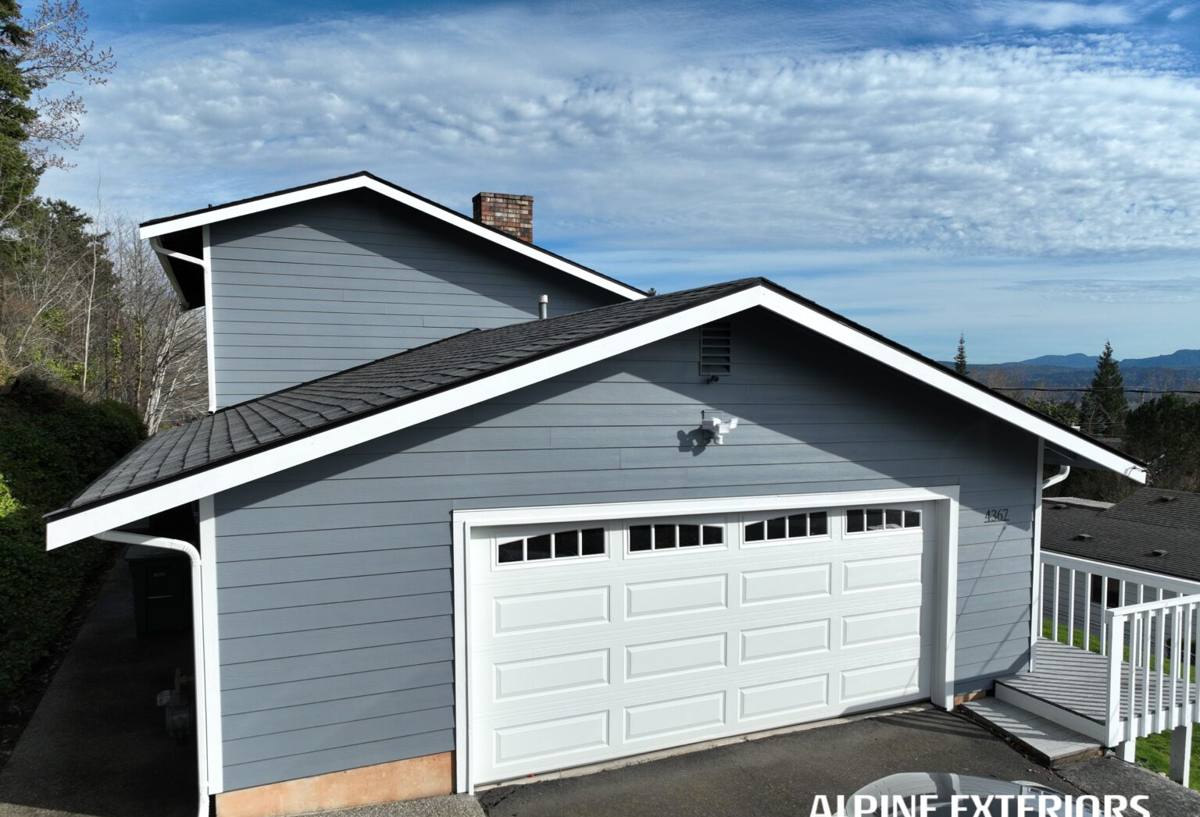
Repair or Replace? Reading the Signs on a Fairhaven Roof
Not every roofing problem calls for a full replacement, and we'd rather tell a homeowner honestly that a repair will hold than sell a replacement that isn't needed yet. That said, there are signs that point toward replacement rather than patchwork, especially on a roof that's already dealt with a decade or two of this climate.
Signs pointing toward repair
- A small, isolated leak with no sign of spreading rot in the decking below
- Localized flashing failure around one chimney, vent, or skylight while the rest of the field is sound
- A handful of wind-lifted or cracked shingles on an otherwise young roof
Signs pointing toward replacement
- Granule loss heavy enough that shingles look patchy or bald in multiple areas
- Moss or algae staining that keeps returning within months of a cleaning
- Soft or spongy decking felt underfoot near valleys, eaves, or around penetrations
- A roof approaching or past the manufacturer's expected service life for this climate, especially if it was never re-roofed with upgraded underlayment or ventilation
- Multiple past repairs that haven't stopped the leaking, which usually means the underlying deck or underlayment has failed, not just the surface
What a Correct Roof Replacement Actually Involves
A roof replacement isn't just stripping off old shingles and nailing down new ones. In a climate that gets this much rain and this much moss pressure, several details separate a roof that lasts from one that doesn't.
Full tear-off, not an overlay
We don't recommend roofing over an existing layer here. An overlay traps moisture between layers, hides deck problems instead of fixing them, and voids most manufacturer warranties. A full tear-off lets us see the deck and start clean.
Deck inspection and repair
Once the old roofing is off, the decking gets inspected board by board. Any section that's soft, delaminated, or water-stained gets replaced before anything new goes down. Skipping this step is one of the most common ways a "new" roof ends up with problems within a few years.
Ice-and-water shield at vulnerable points
Eaves, valleys, and areas around chimneys and skylights are where wind-driven rain does the most damage. A self-adhering waterproof membrane in these areas backs up the shingles at the exact spots most likely to leak.
Synthetic underlayment across the field
Modern synthetic underlayment sheds water better and holds up to job-site weather better than old felt paper, which matters on a project that may see a few rainy days before it's dried in.
Proper flashing at every penetration
Chimneys, vent pipes, skylights, and roof-to-wall transitions all need correctly formed and sealed flashing, not just a bead of caulk. Caulk fails; well-formed metal flashing sheds water on its own.
Balanced ventilation
Intake at the eaves and exhaust at the ridge keep the attic from trapping moisture, which both extends shingle life and reduces the conditions that let moss and algae take hold in the first place.
Material Options for Salt Air and Heavy Moss
There's no single "best" roofing material for every home — it depends on budget, roof pitch, and how much long-term maintenance a homeowner wants to take on. Here's how the common options stack up for this specific climate.
| Material | How it handles moss and moisture | Salt air / corrosion resistance | Relative lifespan | Maintenance |
|---|---|---|---|---|
| Architectural (dimensional) asphalt shingle, algae-resistant | Copper- or zinc-impregnated granules resist algae and moss significantly better than standard shingles | Good when paired with corrosion-resistant fasteners and flashing | 25–30 years typical | Periodic soft washing recommended |
| Standard 3-tab asphalt shingle | More prone to moss and algae staining over time; thinner profile sheds water less effectively | Fair | 15–20 years typical | More frequent cleaning needed |
| Standing-seam metal | Steep, smooth profile sheds moisture and discourages moss growth | Very good with the right coating and fastener spec | 40–50+ years typical | Low, but higher upfront cost |
| Cedar shake | Absorbs moisture and is highly susceptible to moss and rot in this climate without diligent upkeep | Fair, but hardware corrodes if not marine-grade | Highly variable, often shortened by moisture | High — regular treatment required |
Our standard recommendation for most Fairhaven homes is a quality algae-resistant architectural shingle — it balances upfront cost, appearance, and real-world performance against moss better than a standard shingle, without the added cost and structural considerations of metal. We'll steer a homeowner toward metal or away from cedar shake when the roof pitch, budget, or long-term maintenance appetite points that way, but we're upfront about the trade-offs either direction rather than pushing one product for everyone.
Ventilation and Moisture Control Matter as Much as the Shingle
We spend as much time talking about what's underneath the shingles as the shingles themselves, because in this climate the underlayment and ventilation system is doing a lot of the real work. An attic that isn't ventilated correctly stays damp longer after every rain, which feeds moss growth from underneath as much as from rain hitting the surface. It also shortens the life of the shingles by cooking them from below in summer and trapping condensation in winter. Correcting ventilation — adding proper intake at the soffits and exhaust at the ridge — is a standard part of how we scope a replacement, not an upsell tacked on afterward.
Our Roof Replacement Process, Start to Finish
- On-site inspection and estimate — we walk the roof (or use a drone where pitch or access requires it), check the attic for ventilation and moisture issues, and give a written scope and price.
- Material selection — we go over shingle or material options suited to the home's exposure, pitch, and budget, with honest trade-offs for each.
- Scheduling around the weather — we plan for a dry work window where possible and protect the open deck if conditions turn during the job.
- Full tear-off and deck inspection — old roofing comes off completely, and any damaged decking is identified and replaced.
- Underlayment, flashing, and waterproofing detail — ice-and-water shield, synthetic underlayment, and new flashing go in at every vulnerable point.
- Shingle or material installation — installed to manufacturer spec, which is also what keeps the material's warranty valid.
- Ventilation correction — intake and exhaust balanced for the attic and roof design.
- Final walk-through and cleanup — magnetic sweep for nails, debris haul-off, and a final inspection with the homeowner before we consider the job done.
What Roof Replacement Costs in This Area — and What Drives the Number
Every roof is different, and we don't quote a real number without seeing the roof, but the factors below are what typically move the price up or down.
| Cost factor | Why it matters |
|---|---|
| Roof size and pitch | More surface area and steeper pitches mean more material, more labor time, and more safety equipment |
| Number of layers being removed | Tearing off two old layers costs more in labor and disposal than one |
| Deck condition | Rotted or delaminated decking found during tear-off adds material and labor to replace |
| Material choice | Standard shingle, algae-resistant shingle, and metal all sit at different price points |
| Number of penetrations and valleys | Chimneys, skylights, vents, and valleys all need extra flashing and labor time |
| Access and site conditions | Difficult access, tree cover, or limited staging space can add time to a job |
| Ventilation upgrades needed | Correcting inadequate intake or exhaust adds a modest cost but pays off in roof life |
As a broad rule, expect a full tear-off and replacement with quality architectural shingle to run into the low-to-mid five figures for an average home, with metal roofing typically costing more upfront in exchange for a much longer service life. The only way to get an accurate number is a walk of the actual roof.
Why a Crew That Already Works Fairhaven and Sudden Valley Matters
A roofing crew that regularly works this part of Whatcom County has already seen how salt air corrodes the wrong fastener choice, how driving rain finds the flashing detail that was rushed, and how fast moss comes back on a roof that wasn't ventilated correctly. That's not something you can fully learn from a manufacturer's installation manual — it comes from doing the work in this specific climate, on this specific building stock, repeatedly. It shows up in small decisions: which fastener and flashing metal we spec to resist salt exposure, where we add extra waterproofing beyond the manufacturer minimum, and how we set ventilation for a roof that has to dry out fast between rain events. Those decisions are the difference between a roof that needs attention again in eight years and one that goes the full distance.
Homeowner Checklist: Getting Ready for a Roof Replacement
- Have your roof inspected before you have visible leaks — moss, granule loss, and soft spots are earlier warning signs
- Ask any contractor for their fastener and flashing spec for salt-air exposure, not just their shingle brand
- Confirm whether ventilation correction is included in the scope, not treated as an optional add-on
- Get the tear-off, underlayment, and flashing details in writing, not just the shingle brand and color
- Ask how deck repairs found during tear-off are priced, so there are no surprises mid-project
- Check licensing, insurance, and manufacturer certification before signing anything
- Clear vehicles from the driveway and move anything valuable out from under eaves before work starts
If your roof is showing moss buildup, granule loss, or you're just not sure whether it's due for a repair or a full replacement, we're happy to take a look and give you a straight answer. Fill out the form below for a free, no-pressure estimate on your Fairhaven roof.