 Sudden Valley Window
 Why Cordata Siding Takes More Punishment Than It Looks Like It Should
Cordata sits close enough to the water and far enough into Whatcom County's marine weather pattern that siding here works harder than most homeowners realize. It isn't one dramatic event that wears siding out — it's the accumulation of small, constant exposures: salt-tinged air drifting in off the Sound, driving rain that comes in sideways during winter storms, and a moss season that can stretch from October well into spring on shaded north- and west-facing walls. Individually, none of that sounds severe. Over ten or fifteen years, it adds up to soft trim boards, swollen seams, and paint that fails years ahead of schedule.
A siding installation done for Cordata needs to account for all three of those factors from the start — not as an afterthought, but as part of how the job is planned, flashed, and fastened. That's a different mindset than installing siding in a dry inland climate, and it's worth understanding before you sign a contract.
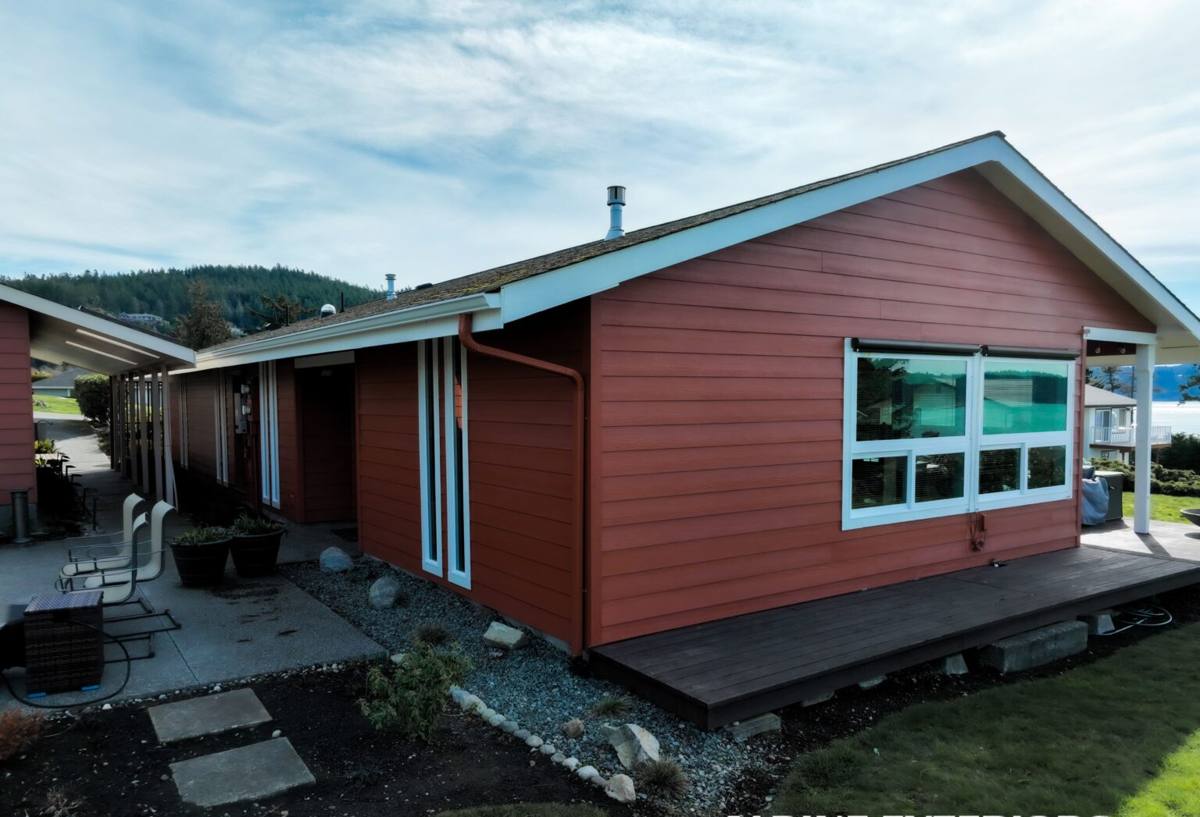
What Salt Air, Driving Rain, and Moss Actually Do to a Wall
Salt Air
Airborne salt is corrosive to exposed metal fasteners, flashing, and trim hardware, and it accelerates the breakdown of lower-grade paint and coatings. It doesn't take direct oceanfront exposure to matter — homes several miles inland in Whatcom County still see measurable salt deposition, especially with prevailing winds off the water. Over time, salt-laden moisture works into any gap in the siding envelope and speeds up corrosion at the fastener level, which is exactly where a wall's structural integrity depends on things staying tight.
Driving Rain
Wind-driven rain doesn't just fall on a wall — it gets pushed up and under laps, into butt joints, and around window and door trim. Standard siding installation assumes rain moves mostly downward. In a climate where storms regularly push rain sideways, every horizontal joint, corner, and penetration is a place where water can be forced backward into the wall assembly if it wasn't detailed correctly the first time.
Moss Season
Shaded, moisture-retaining surfaces in Whatcom County can grow moss for the better part of the year. Moss itself doesn't destroy fiber cement siding, but it holds moisture against the surface far longer than an exposed, sun-dried wall would experience, which shortens the life of caulk joints and keeps trim boards damp longer after every rain. Left unaddressed, that constant dampness is what eventually causes rot at butt joints and corner boards — not the siding material itself.
Signs a Cordata Home's Siding Needs Attention
Most siding failure in this climate is gradual and easy to miss until it's expensive. Walk your exterior once or twice a year and look for:
- Soft or spongy spots when you press on trim boards, especially near the bottom of walls and around window sills
- Paint that's peeling, bubbling, or chalking faster on one side of the house than another (usually the side facing prevailing weather)
- Persistent moss or algae growth that doesn't dry out between rain events
- Visible gaps or separation at butt joints, corners, or where siding meets trim
- Rust streaking below fasteners or flashing
- Warping, cupping, or bowing panels, particularly on older wood or engineered wood products
- Interior signs — musty smell, discolored drywall, or peeling interior paint near exterior walls
Any one of these on its own might just need a repair. Several together, especially combined with a home that's twenty-plus years past its last siding replacement, is usually a sign it's time for a real conversation about a full re-side.
What a Correct Siding Installation Actually Involves
Siding installation gets treated as a cosmetic job more often than it should. In a climate like this one, most of what actually protects a home happens underneath the visible siding, not on the surface.
Water Management Details
Before any siding goes up, the wall needs a properly lapped weather-resistant barrier, correctly integrated flashing at every window, door, and roofline intersection, and kick-out flashing wherever a roof edge meets a wall. These details determine whether wind-driven rain gets shed to the outside or finds its way behind the cladding. This is the part of the job that's invisible once it's finished — and the part most likely to be rushed on a lower-bid installation.
Fastening and Clearances
Fiber cement siding has to be fastened at the manufacturer's specified pattern and depth — over- or under-driven nails compromise both the water resistance and the appearance of the finished wall. Proper clearance also matters: siding installed too close to grade, a deck, or a roofline wicks moisture upward and traps it, which is a leading cause of early rot regardless of what material is used.
Trim, Joints, and Caulking
Butt joints and trim intersections are where driving rain does the most damage if they're not detailed correctly. Correctly installed fiber cement uses factory-primed or factory-finished trim, sealed with a high-quality, flexible sealant rated for exterior use — not general-purpose caulk that will shrink and crack within a couple of seasons.
Why We Install James Hardie Fiber Cement and Nothing Else
We don't install vinyl, LP SmartSide, Cemplank, Allura, or primed wood siding. That's a deliberate standard, not a sales pitch, and it comes down to how those products hold up against exactly the conditions Cordata deals with.
Vinyl expands, contracts, and can warp with temperature swings, and it offers no real fire resistance. Engineered wood products like LP SmartSide are wood-based at the core, which makes them more sensitive to sustained moisture exposure than fiber cement — a real concern in a climate with a long wet season. Other fiber cement brands may be reasonable products, but we've standardized on one manufacturer, one set of installation specifications, and one warranty structure so every job we do is consistent and every crew member is trained the same way.
James Hardie fiber cement is non-combustible, holds a factory-applied ColorPlus finish that resists fading and chipping far longer than field-applied paint, and is engineered in regional formulations matched to different climate conditions. Homes in Whatcom County's marine climate are typically specified with the formulation engineered for damp, temperate conditions rather than the version built for hot, humid regions — that distinction is part of what "climate-engineered" actually means in practice, not just a marketing term. Backed by a strong transferable warranty, it's the product we're willing to put our name behind.
Our Process for a Cordata Siding Installation
- Assessment and estimate. We look at the existing siding, sheathing, and trim, check for hidden moisture damage, and walk you through what a correct installation will involve for your specific home.
- Prep and removal. Old siding comes off, sheathing is inspected and repaired as needed, and any rot or damage found underneath is addressed before anything new goes up — not covered over.
- Water barrier and flashing. This is the step that determines long-term performance. We install and lap the weather-resistant barrier and flash every penetration before siding installation begins.
- Siding installation. James Hardie panels or lap siding are installed to manufacturer fastening specifications, with proper clearances at grade, decks, and rooflines.
- Trim, caulking, and final walkthrough. Trim is set, joints are sealed with exterior-rated sealant, and we walk the finished job with you before calling it done.
What Affects the Cost of a Siding Installation
Every home is different, but the same handful of factors drive most of the cost variation we see on siding jobs in this area.
| Factor | Why It Matters |
|---|---|
| Home size and number of stories | More wall area and taller walls mean more material, more labor, and more scaffolding or lift access |
| Condition of existing sheathing | Hidden rot found during tear-off adds repair work before new siding can go on |
| Trim and architectural detail | Homes with more corners, dormers, and trim transitions take longer to flash and finish correctly |
| Siding profile and finish selection | Lap width, texture, and ColorPlus color options vary in material cost |
| Site access | Tight lots, landscaping, or limited driveway access can slow staging and increase labor time |
| Removal and disposal of old siding | Full tear-off of old material adds cost versus a bare-wall new build |
We give a written estimate that accounts for these specifics rather than a flat per-square-foot number, since two homes of the same size can have very different scopes of work once we look at what's actually underneath the existing siding.
Why It Matters to Hire a Crew That Already Works in This Area
A crew that installs siding across a range of climates has to relearn local conditions on every job. A crew that regularly works Cordata and the broader Sudden Valley area already knows how prevailing weather hits different sides of a typical home here, where moss tends to build up fastest, and how much clearance to leave given the rainfall this region sees most winters. That familiarity shows up in the details — flashing choices, fastener selection, and where extra attention gets paid — more than in anything visible on the surface once the job is finished.
It also matters for permitting and inspection. Local crews are used to working within Whatcom County's permitting expectations and know what inspectors here typically look for on an exterior re-side, which keeps a project moving instead of stalling on avoidable paperwork issues.
Maintaining Your New Siding
Correctly installed James Hardie siding is low-maintenance, not no-maintenance. A simple annual routine keeps it performing the way it's designed to:
- Rinse down siding once or twice a year, focusing on shaded areas prone to moss and algae buildup
- Keep gutters clear so water isn't overflowing directly onto siding and trim
- Trim back vegetation and landscaping that keeps a wall section shaded and damp
- Inspect caulk joints every couple of years and have any cracked or shrunken sealant redone
- Address any soft trim or visible gaps promptly rather than waiting for the next scheduled maintenance
If you're noticing wear on your current siding or you're planning ahead for a home in Cordata or the wider Sudden Valley area, we're happy to take a look and put together a free, no-pressure estimate — no obligation, just an honest read on where your home stands.