 Sudden Valley Window
 Why Barkley Homes Wear Out Their Siding Faster Than You'd Expect
Barkley sits inside the same weather pattern that shapes every home around Sudden Valley and the rest of Whatcom County: long stretches of driving rain, damp marine air that carries salt inland off the Sound, and a moss season that can run from late fall clear through spring. None of that is unusual for this part of Washington, but it's a punishing combination for exterior siding. Wood-based products swell and check. Paint film breaks down years ahead of schedule. Moss and algae find a foothold on anything that stays damp for more than a day or two, and once they're established they hold moisture right against the wall assembly, which is where the real damage starts.
We've worked enough homes in and around Barkley to know the failure patterns aren't random. They cluster on north-facing walls that never get direct sun, under overhangs that are too shallow to keep wind-driven rain off the wall, and around old trim details that were never properly flashed. A siding replacement done right in this neighborhood has to account for all of that from the start — not just match the color of the house next door.
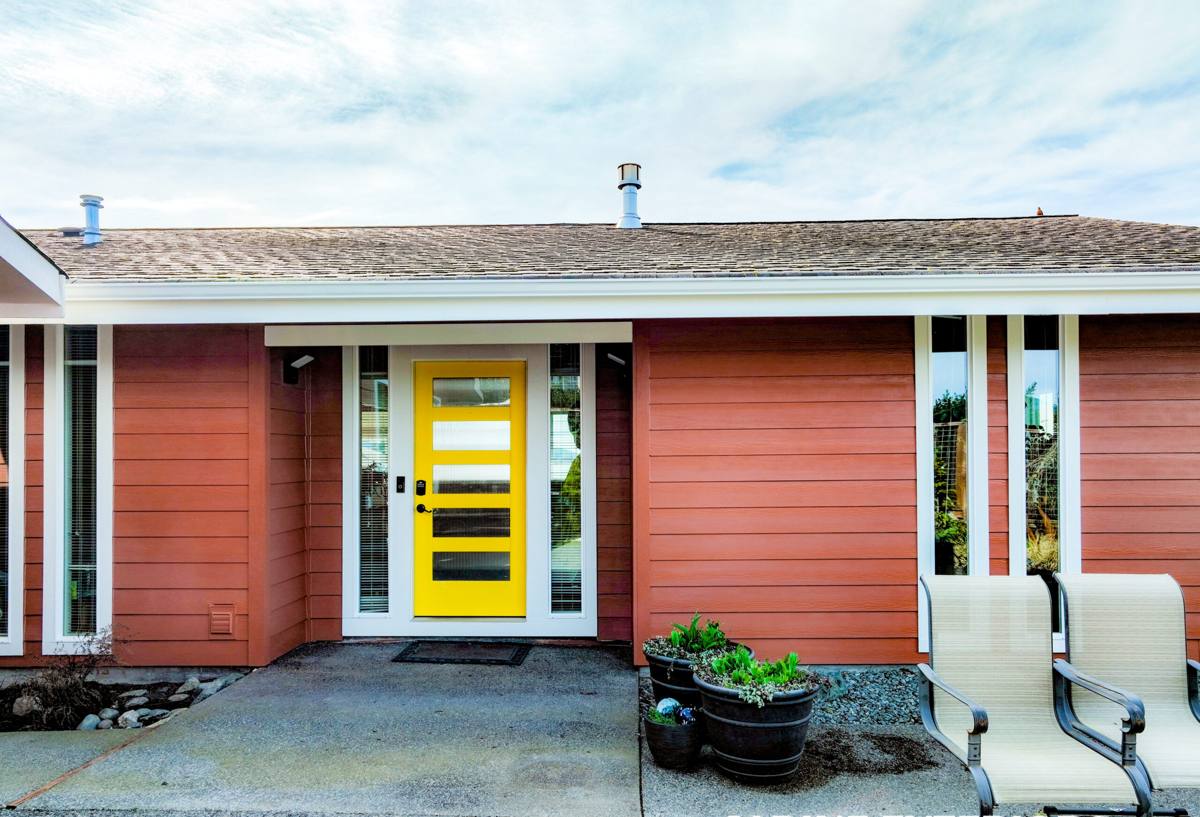
What a Correct Siding Replacement Actually Involves
Full tear-off, not a cover-up
Re-siding over an existing layer hides problems instead of fixing them. We remove the old siding down to the sheathing so we can actually see what's underneath — rot, soft spots, old staples, improperly lapped paper, all of it. In a climate this wet, skipping that step just buries an existing moisture problem under new material.
Weather-resistive barrier and flashing come first
The siding itself is the least important layer for keeping water out of the wall. The weather-resistive barrier, the window and door flashing, and the way everything laps and drains is what actually protects the structure. We install a continuous drainage plane, flash every penetration, and make sure water that gets behind the cladding has somewhere to go — because in Whatcom County, some water always gets behind the cladding eventually.
Fastening, clearances, and joints matter more here than in a dry climate
Fiber cement has to be fastened correctly — right nail type, right spacing, right depth — or it won't perform the way it's engineered to. We also hold proper ground clearance, keep siding off roof lines and decks per the manufacturer's specs, and treat every butt joint and caulk line as a place water will eventually test. A job that looks fine going up but skips these details tends to show it within a few winters, not decades.
Our Process, Start to Finish
- On-site assessment. We walk the exterior, check for moisture intrusion, soft sheathing, and problem details (deck ledgers, window flashing, roof-wall intersections) before we ever quote the job.
- Written scope and product selection. You get a clear plan — which James Hardie product line, which profile, which ColorPlus color — and a straightforward explanation of why.
- Tear-off and substrate repair. Any rotted sheathing or framing found during removal gets addressed before new material goes up, not papered over.
- Weather barrier and flashing installation. This is the layer that actually keeps Barkley's rain out, and it's where we spend the most care.
- Siding installation to manufacturer spec. Correct fastening, clearances, and joint treatment throughout.
- Final walkthrough. We go over the finished job with you before we consider it done.
Why We Install Only James Hardie Fiber Cement
We made a decision as a company to install one siding system: James Hardie fiber cement. That's not a marketing angle — it's a response to what we've seen happen to other products in exactly this climate. Fiber cement is non-combustible, it doesn't absorb water and swell the way wood-based panels can, and it doesn't give moss and mildew the organic material they feed on. Hardie also engineers specific product lines for different climate zones (their HZ5 and HZ10 systems), which matters in a region that gets sustained wet weather rather than the occasional storm.
The ColorPlus factory finish is also a real advantage here. It's baked on in a controlled environment rather than field-painted, which means better adhesion and a finish that's built to handle UV and moisture cycling without the repaint schedule that field-applied paint requires. Add a strong transferable warranty and a track record of decades of real-world performance in wet coastal climates, and it's the product we're willing to put our name behind.
What We Don't Install — and Why
We get asked about alternatives fairly often, so we're upfront about where we land on each one:
| Product | What it gets right | Why we don't install it |
|---|---|---|
| Vinyl siding | Low upfront cost, low maintenance in dry climates | Can warp or buckle with temperature swings and moisture cycling; seams and J-channels give wind-driven rain more entry points than a fiber cement lap system |
| LP SmartSide | Engineered wood, easier to cut and handle than fiber cement | Still a wood-based product — edge sealing and caulk maintenance have to stay ahead of moisture or the substrate is at risk over time |
| Cemplank / Allura | Also fiber cement, competitively priced | We've standardized on one manufacturer so our crews, our warranty process, and our color-matching stay consistent across every job we do |
| Primed spruce / cedar | Traditional look, real wood grain | Requires an ongoing paint and caulk maintenance schedule that most homeowners underestimate, especially in a climate with this much annual rainfall |
None of these are bad products in every situation. They're just not what we're willing to warranty our workmanship on in a climate that punishes moisture-sensitive materials the way this one does.
Cost Factors for a Barkley Siding Replacement
Every home is different, so we don't quote a number until we've actually seen the house — but these are the variables that move the price up or down:
| Factor | How it affects cost |
|---|---|
| Amount of substrate repair needed | Rotted sheathing or framing found during tear-off adds labor and material before new siding can go up |
| Home size and wall complexity | More corners, dormers, and trim details mean more cutting, flashing, and labor time |
| Siding profile and product line | HardiePlank lap siding, HardieShingle, and HardiePanel carry different material and install costs |
| Color selection | Factory ColorPlus finishes vary slightly in price by color and product line |
| Access and site conditions | Steep grades, tight lot lines, or limited staging space around Sudden Valley can affect labor time |
| Trim and accessory work | Fascia, soffit, and corner trim replacement done alongside siding adds to scope but improves the finished result |
Signs Your Barkley Home May Need Siding Replacement Soon
- Visible moss or dark streaking that returns within weeks of cleaning
- Soft or spongy spots when you press on the siding, especially near the bottom courses
- Paint that's peeling, bubbling, or needing repainting more often than every 8-10 years
- Cracked, warped, or delaminating panels, particularly on north-facing or shaded walls
- Gaps opening up at butt joints, corners, or around window and door trim
- A musty smell or visible staining on interior walls that share an exterior wall
- Siding that's original to a home built more than 25-30 years ago
Why Hiring a Crew That Already Works Barkley Matters
Siding installation isn't just about the product — it's about how well the installer understands the specific conditions of the wall they're covering. A crew that's worked Barkley and the broader Sudden Valley area already knows which wall orientations take the worst weather, how the local moss season behaves, and what kind of flashing details hold up here versus in a drier climate. That local knowledge shows up in the details: where extra flashing goes, how tight the joints get sealed, and which corners of a wall assembly deserve the most attention during install.
It also matters for the practical side of the job — knowing the area's typical lot access, working around Sudden Valley's roads and site conditions efficiently, and understanding what local building departments expect for permitting and inspection. That familiarity saves time and avoids the surprises that slow down a crew unfamiliar with the area.
Ready to Talk About Your Siding?
If your Barkley home is showing any of the signs above, or you're just planning ahead, we're happy to take a look and walk you through what a proper James Hardie installation would involve for your specific house. Fill out the form below for a free, no-pressure estimate — no obligation, just a straight answer about what your home needs.