 Sudden Valley Window
 Why Siding Wears Out Faster Around Lake Whatcom
Homes in Sudden Valley and along the Lake Whatcom shoreline take a different kind of beating than a house twenty miles inland. Whatcom County's marine-influenced climate means moisture is a near-constant presence: driving rain off the lake, humid air trapped by the surrounding hillsides, and a moss and algae season that can run more than half the year on shaded, north-facing walls. Add in the salt-tinged air that drifts up from Bellingham Bay and the greater Puget Sound corridor, and you get a combination that's tough on almost any exterior cladding — especially wood-based products that were never engineered for it.
The practical result: siding that looks fine from the street can be hiding trapped moisture, soft spots, and early rot behind it. Caulk joints fail sooner. Paint doesn't hold as long. And products with any wood content start to swell, delaminate, or grow moss in the grain within a few years of installation. None of this is unique to any one house — it's a function of the microclimate this neighborhood sits in, and it's why siding decisions here should be made differently than they would be in a dry, low-humidity part of the state.
What This Means for a Replacement Project
When we replace siding on a Lake Whatcom home, we're not just matching the old look — we're solving for a specific set of conditions: sustained dampness, limited direct sun on shaded elevations, and a long moss season. That changes what belongs behind the siding, how it's flashed, and which product goes on the wall.
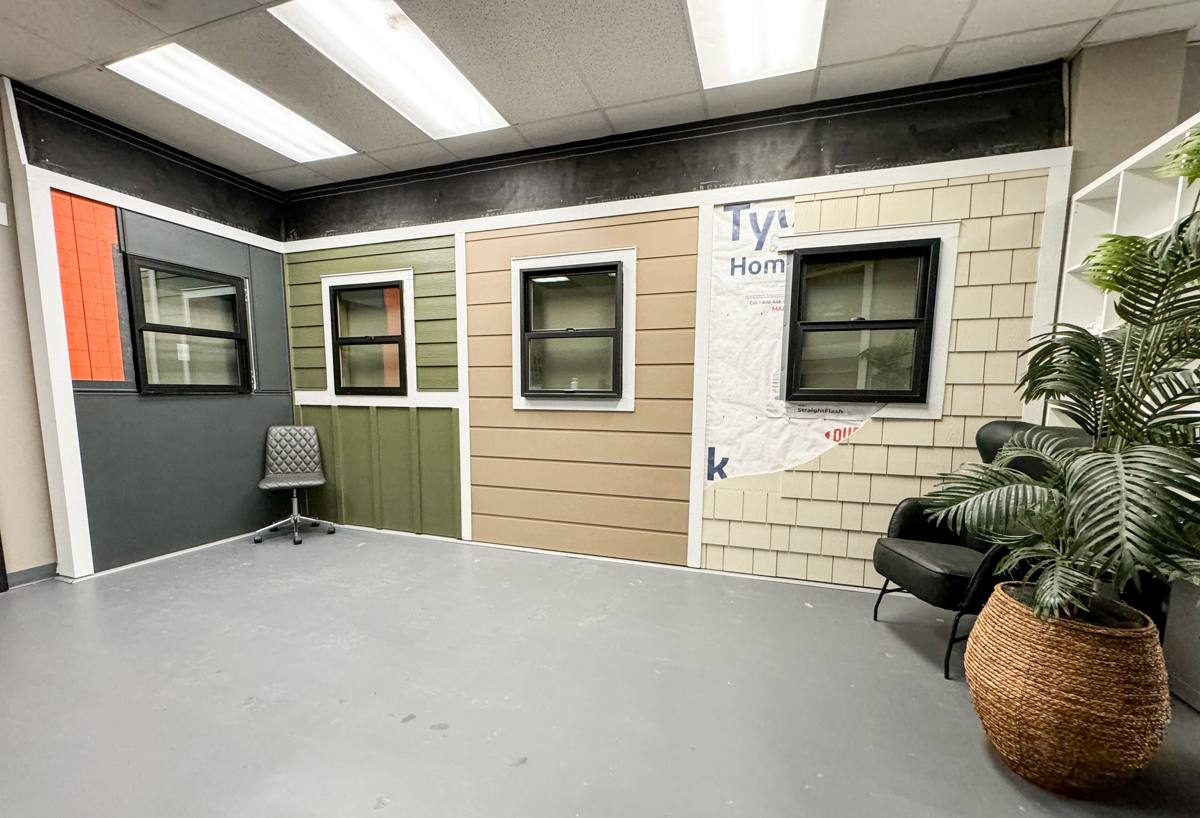
What a Correct Siding Replacement Actually Involves
Siding replacement is not a cosmetic swap. Done right, it's a full reset of your home's water-management system, with the visible cladding as the last step rather than the first. A properly executed job includes:
- Complete tear-off of the old siding down to the sheathing, so hidden damage can actually be found and fixed
- Inspection and repair of any rotted or water-damaged sheathing, framing, or trim before anything new goes on
- Installation of a new water-resistive barrier (weather barrier), lapped and sealed correctly at every seam
- Correct flashing at every window, door, deck ledger, and roof-to-wall intersection — the details that actually stop water intrusion
- Proper fastening schedule and clearances (siding held off decks, grade, and roof lines per manufacturer spec)
- Factory-finished siding installed with the right nailing pattern, gaps, and caulking approach for that product
Skip any one of these steps and you can end up with siding that looks new but fails from behind within a few years — which is exactly the kind of shortcut that shows up as a warranty claim or a rot repair down the line.
Why We Only Install James Hardie Fiber Cement
We get asked regularly why we don't offer vinyl, LP SmartSide, or other engineered wood siding as options. The honest answer is that we made a standard for our own crews, based on what performs consistently in this climate, and James Hardie fiber cement is the only product that meets it on every home we touch.
What the Alternatives Get Right — and Where They Struggle Here
Vinyl siding is inexpensive and low-maintenance in the sense that it doesn't need painting. But it's a thin plastic product that expands and contracts with temperature swings, can crack in cold snaps, and relies heavily on a tight, well-executed install to keep water out at seams and penetrations — there's very little margin for error. LP SmartSide and other engineered wood products perform well when kept dry, but they use wood strand cores with resin binders, and in a climate with this much sustained moisture and shade, any breach in the factory coating becomes an entry point for swelling and rot over time. None of these are "bad" products in every setting. They're just not the product we're willing to put our name behind in a neighborhood that sees this much rain and moss.
| Factor | Vinyl | LP SmartSide / Wood-Based | James Hardie Fiber Cement |
|---|---|---|---|
| Core material | PVC plastic | Wood strand + resin | Cement, sand, cellulose fiber |
| Combustibility | Melts/warps in heat | Combustible | Non-combustible |
| Moisture behavior | Doesn't absorb, but seams leak | Can swell/rot if breached | Engineered for wet/humid climates |
| Moss/algae resistance | Moderate | Lower once coating is compromised | Strong with ColorPlus finish |
| Typical lifespan (PNW) | 15-25 years | 15-25 years | 30-50+ years installed to spec |
| Finish | Color molded in, fades over time | Factory or field paint | Baked-on ColorPlus finish |
James Hardie's fiber cement doesn't have a wood core to swell or rot, and it's not a plastic product that depends on perfect seams to stay watertight. It's dense, stable in this climate's temperature and humidity swings, and it takes a factory-baked finish that holds color and resists the moss and mildew staining that's so common on shaded Lake Whatcom walls. It's also non-combustible, which matters more every fire season in this part of the state.
Choosing the Right Hardie Product Line for This Neighborhood
James Hardie engineers its siding by climate zone — HZ5 is formulated for regions like ours with more moisture and freeze-thaw cycling, as opposed to the HZ10 formulation used in hot, dry climates. For Sudden Valley and Lake Whatcom homes, we install HZ5-rated product as a baseline, not an upgrade.
Common Choices for This Area
Most homes here land on one of a few configurations, depending on the existing architecture and how much sun exposure each elevation gets:
- HardiePlank lap siding — the most common choice, available in several exposure widths and textures, good for full re-siding or matching an existing lap profile
- HardieShingle — for homes with a shingle-style look, particularly on gables or accent areas
- HardiePanel — vertical panel siding, often used on accent walls, garages, or modern-style homes
- HardieTrim — matching fiber cement trim boards around windows, corners, and fascia so the whole envelope is consistent, non-wood material
All of it comes pre-finished through the ColorPlus system, which bakes color onto the board in a controlled factory environment rather than relying on field-applied paint that has to cure and hold up in damp conditions from day one.
Our Process, Start to Finish
The process is the same discipline on every Lake Whatcom job, whether it's a full re-side or a partial replacement after storm or moisture damage:
- On-site assessment — we walk the exterior, check known trouble spots (shaded walls, deck ledgers, window heads), and probe any areas showing soft spots or staining
- Written estimate — scope, product line, color, and a clear breakdown of what's included, with no vague allowances
- Tear-off and sheathing inspection — old siding comes off, sheathing gets inspected and repaired where needed before we move forward
- Weather barrier and flashing — new water-resistive barrier installed and properly lapped, flashing detailed at every penetration
- Hardie installation — siding installed to manufacturer fastening and clearance specs, with attention to gaps at trim and grade
- Final walkthrough — we go over the finished work with you before calling the job done
Cost Factors for a Lake Whatcom Siding Job
Every home is different, but the same variables tend to move the price up or down on jobs in this area:
| Factor | Why It Matters Here |
|---|---|
| Extent of hidden damage | Homes with long-term moisture exposure often need sheathing or framing repair once old siding comes off |
| Home size and elevation count | More wall area and more complex rooflines mean more flashing details and labor |
| Product line and profile | Lap, shingle, and panel Hardie products carry different material and labor costs |
| Access and site conditions | Sloped lots and lake-adjacent properties can affect staging and scaffolding needs |
| Trim and accessory scope | Full trim replacement in fiber cement adds cost but keeps the whole exterior on one consistent, low-maintenance material |
We don't quote broad ballpark numbers without seeing the house, because the hidden-damage variable in this climate is real and it's the single biggest swing factor on any older home's siding project.
Signs Your Siding Needs Replacing, Not Just Patching
Some damage can be repaired in place. Other signs mean the whole wall assembly needs to come off. Before you decide, look for:
- Soft or spongy spots when you press on the siding, especially near the bottom courses or below windows
- Persistent moss or algae growth that returns within weeks of cleaning
- Visible warping, buckling, or gaps between boards
- Peeling or bubbling paint that keeps recurring in the same spots
- Water stains or discoloration on interior walls near exterior corners
- Siding that's original to a home more than 20-25 years old, particularly if it's wood-based product
If you're seeing more than one of these, it's worth having someone look at the sheathing underneath before deciding between a repair and a full replacement.
Why Local Experience Matters on This Job
A crew that already works Sudden Valley and the Lake Whatcom shoreline knows which elevations on a given lot orientation take the worst of the moss and moisture, how the local building department handles permitting for exterior work, and what this climate does to a job that's rushed or under-flashed. That's not something you get from a crew that mostly works drier parts of the state and treats every siding job the same way. It shows up in the details — where extra flashing gets added even when it's not strictly required, which walls get watched more closely during tear-off, and how the job is sequenced around this area's weather windows.
If your siding is showing its age, or you just want an honest read on whether it's a repair or a full replacement, we're happy to come take a look. The estimate is free, there's no pressure, and you'll get a straight answer about what your home actually needs — fill out the form below to get started.