 Sudden Valley Window
 Energy-Efficient Windows Built for Cordata's Weather
Cordata sits in the part of Whatcom County where marine weather off Bellingham Bay meets everyday Pacific Northwest drizzle. Homes here don't fail from one dramatic storm — they fail slowly, from months of low-grade dampness, wind-driven rain, and salt-tinged air working into gaps that were never sealed quite right. Energy-efficient windows done correctly are as much about keeping moisture and air movement under control as they are about a lower heating bill. Done poorly, a "high-performance" window can actually make a wall assembly worse by trapping water behind good-looking trim.
This page covers what energy-efficient window work actually means for a Cordata home specifically: what the local climate demands, what a correct installation looks like, and how our process is built around the realities of this area rather than a generic national playbook.
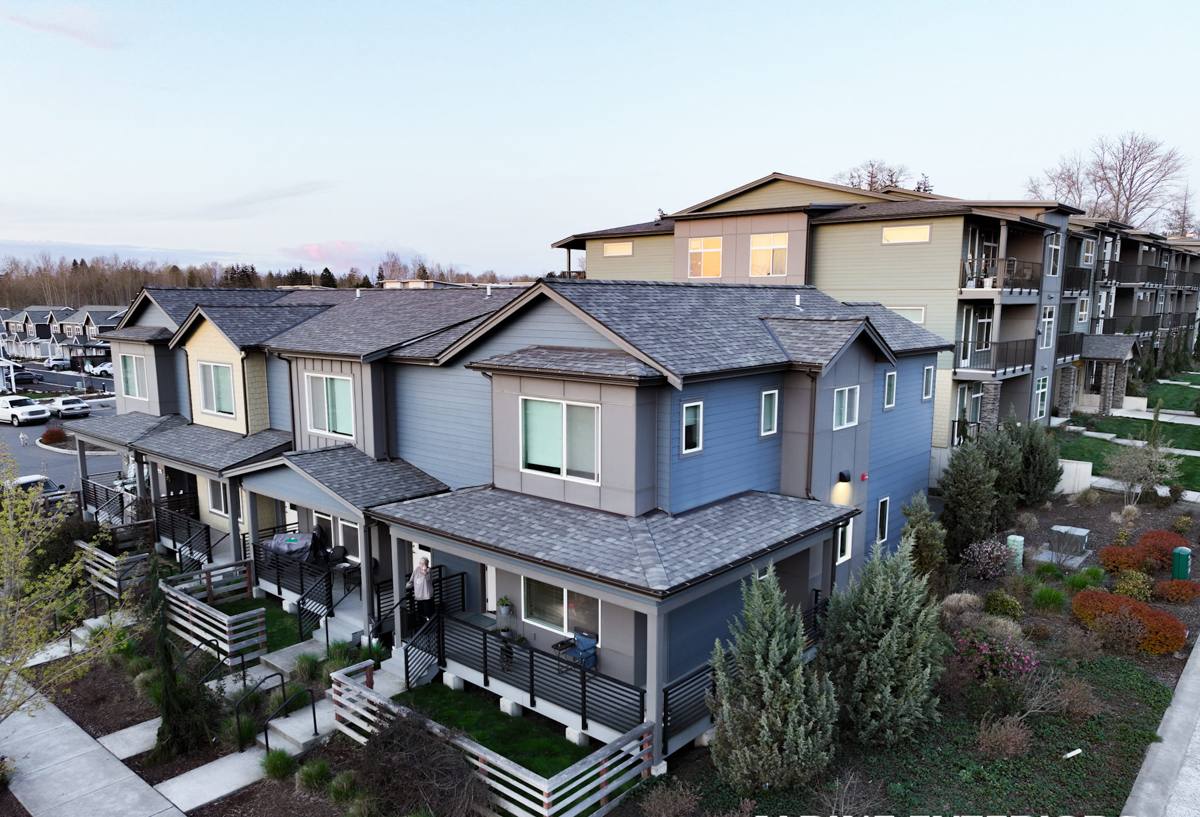
What Cordata Homes Are Up Against
Cordata's exposure isn't extreme, but it's persistent, and persistent is what wears window systems down over a couple of decades:
- Salt air: Proximity to Bellingham Bay means airborne salt reaches further inland than most homeowners assume, accelerating corrosion on hardware, screws, and lower-grade metal components.
- Driving rain: Wind-driven rain doesn't just fall — it pushes sideways into any gap in flashing, caulk, or frame-to-siding transitions, which is where most window leaks actually start.
- Long moss season: Extended damp, shaded conditions common through much of the fall-to-spring stretch keep window sills, trim, and nearby siding wet longer than a drier climate would, giving moss and mildew time to take hold on anything that doesn't shed water well.
- Temperature swing, not extremes: Whatcom County doesn't see brutal cold snaps often, but the steady cool-and-damp stretch means poorly insulated windows lose heat continuously for months, not just on a few bad days.
None of this is unique to one house — it's the baseline for the area. The difference between a window installation that lasts fifteen-plus years without trouble and one that starts leaking in year four almost always comes down to flashing detail and sealant choice, not the window brand printed on the sticker.
What "Energy-Efficient" Actually Means
The term gets used loosely. For a Cordata home, it should mean a specific set of measurable properties working together, not just a double-pane label:
U-Factor
Measures how well the window resists heat transfer — lower is better. In a marine climate like this one, U-factor matters more for comfort near the glass (cold radiating off a single-pane or aging double-pane window in January) than for headline energy savings alone.
Solar Heat Gain Coefficient (SHGC)
Measures how much solar heat passes through the glass. Western Washington doesn't get intense sun most of the year, so SHGC is a smaller factor here than it would be in a sunnier climate, but orientation still matters on west- and south-facing walls.
Low-E Coatings
A microscopically thin coating that reflects heat while still letting visible light through. It helps in both directions — keeping interior heat in during the damp months and reducing glare and minor heat gain on the few genuinely sunny days.
Gas Fills and Spacer Systems
Argon-filled sealed units insulate better than plain air-filled units, and warm-edge spacer systems (versus older aluminum spacers) cut down on condensation at the glass edge — a common complaint in humid coastal homes.
All four of these work together. A window can have a great U-factor on paper and still perform poorly if it's installed with gaps in the rough opening, so the number on the label is only half the equation.
Signs a Cordata Home Needs Window Work
Homeowners usually notice a problem well before they connect it to the windows themselves. Common signs worth taking seriously:
- Condensation building up between the panes (a sign the seal on the insulated glass unit has failed)
- Visible moss, black staining, or soft wood at the bottom corners of window trim or sills
- A noticeable draft near the window frame even with it fully latched
- Difficulty opening, closing, or locking — often a sign the frame has swelled, warped, or the hardware has corroded
- Paint or caulk that keeps failing at the same spot no matter how often it's redone
- Rooms near older windows that feel noticeably colder or damper than the rest of the house
- Rising heating costs without any other clear explanation
Any one of these can be minor. Two or three together, especially moisture staining plus a hardware problem, usually means the window and the flashing behind it both need attention — not just a caulk touch-up.
Comparing Frame and Glass Options
There's no single "best" window — the right choice depends on exposure, budget, and how much upkeep the homeowner wants to take on. Here's how the common options stack up for a coastal Whatcom County home:
| Frame Material | Moisture Resistance | Maintenance | Typical Lifespan |
|---|---|---|---|
| Vinyl | Good — won't rot or corrode | Low | 20–30+ years |
| Fiberglass | Very good — dimensionally stable in wet/dry cycles | Low | 30+ years |
| Aluminum | Fair — can pit or corrode near salt air over time | Moderate | 20–30 years |
| Wood (unclad) | Poor without diligent upkeep in this climate | High | Varies widely with maintenance |
| Wood-clad (vinyl or aluminum exterior) | Good on the exterior face; interior still wood | Moderate | 25–30+ years |
For most Cordata homes, we steer people toward vinyl or fiberglass for anything facing prevailing wind and rain, simply because they don't give moisture anything to work with. Unclad wood can still make sense on a covered or well-protected elevation where a homeowner wants the look and is willing to keep up with painting — that's a legitimate trade-off, not a wrong choice, as long as it's made with eyes open.
What a Correct Installation Actually Involves
The window unit itself is often the easy part. The details that determine whether it stays watertight for decades happen around it:
Removal and Opening Inspection
Once the old window is out, the rough opening gets inspected for hidden rot or moisture damage before anything new goes in. In a climate this damp, it's common to find some degree of sill or framing damage that wasn't visible from the outside — catching it now is far cheaper than dealing with it later.
Flashing and Water Management
Proper flashing directs any water that gets past the exterior cladding down and out, away from the framing — it doesn't just rely on caulk to keep water out entirely. This is the single most important step for driving-rain resistance, and it's also the step most likely to get rushed on a low-bid job.
Air Sealing
The gap between the window frame and the rough opening gets sealed with an appropriate low-expansion foam or backer rod and sealant — not stuffed with fiberglass insulation, which does little to stop air movement.
Sealant Selection
Exterior sealants break down under UV and constant damp-dry cycling faster than most homeowners expect. Using a sealant rated for the exposure, and applying it correctly rather than just heavily, is what keeps a window looking and performing well ten years out instead of needing re-caulking every other season.
Interior Finish
Trim, insulation at the perimeter, and interior sealing get finished last, so the whole assembly — inside and out — is airtight and weathertight, not just the parts that are visible.
Our Process for Cordata Projects
- On-site assessment — we look at existing window condition, exposure on each elevation, and any signs of moisture already present.
- Product recommendation — frame material, glass package, and options matched to that specific home's exposure and the homeowner's priorities (efficiency, upkeep, budget, or a mix).
- Written estimate — clear scope, materials, and pricing before any work starts.
- Removal and opening inspection — old units out, framing checked and repaired if needed before the new window goes in.
- Installation with proper flashing and air sealing — the step-by-step detail described above, done the same way every time.
- Final check and walkthrough — operation, locks, and seals confirmed with the homeowner before we consider the job done.
Cost Factors Worth Understanding
Window pricing varies enough by project that a single number isn't useful, but the main cost drivers are consistent:
| Factor | Why It Affects Price |
|---|---|
| Frame material | Fiberglass typically costs more upfront than vinyl; both usually cost less over time than high-maintenance materials |
| Number of openings | Larger projects generally lower the per-window cost through shared labor and setup |
| Existing damage | Rot or framing repair discovered during removal adds cost but prevents a bigger problem later |
| Glass package | Upgraded Low-E coatings, gas fills, or tempered/laminated glass for safety code areas add to unit cost |
| Exposure and access | Second-story or hard-to-access openings take more time and equipment than ground-level work |
As a general rule, replacement windows for a typical home run from a few hundred to well over a thousand dollars per opening depending on size, material, and glass package — broad ranges, not a quote. The only way to get an accurate number is to look at the actual openings and conditions.
Why Local Experience in Cordata Matters
A crew that regularly works this part of Whatcom County already knows which elevations tend to take the worst of the driving rain, how far salt air realistically travels inland from the bay, and how long moss season actually runs here — knowledge that shapes real decisions like sealant choice, flashing detail, and which frame materials to steer clients toward on exposed walls. That's different from a crew running a generic checklist written for a drier region. It also means we're a known, reachable name if a question comes up on a window we installed five or ten years ago — not a company that did one job and moved on.
If you're weighing whether your Cordata home's windows need attention, or you already know it's time, we're happy to take a look and give you a straight answer — no pressure, no inflated quote to "test" you. Request a free estimate through the form below and we'll walk the property, explain what we see, and give you real numbers to work with.