 Sudden Valley Window
 Edgemoor's Climate Is Hard on Windows — Here's Why
Homes in and around Edgemoor sit close enough to open water that the air itself works against your windows year-round. Salt-laden moisture rides in on the wind, settles into hardware and weep holes, and slowly corrodes anything that isn't built to resist it. Add Whatcom County's long stretch of driving rain — wind-driven rather than straight-down — and you've got water testing every seam, sill, and corner of a window whether it's facing the weather or not. Then comes moss season, which in this part of Washington isn't a few weeks in fall — it's most of the year. Moss and algae hold moisture against wood trim, frames, and sills long after the rain stops, which is exactly the condition that rots wood and breaks down cheap seals.
None of this is unique to any one house. It's the baseline for the whole Sudden Valley and Edgemoor area, and it's why a window that performs fine in a drier inland climate can start failing here within a few years. Custom windows done right for this neighborhood aren't about style upgrades — they're about frames, glass, and installation details chosen specifically to survive salt air, driving rain, and moss, in that order.
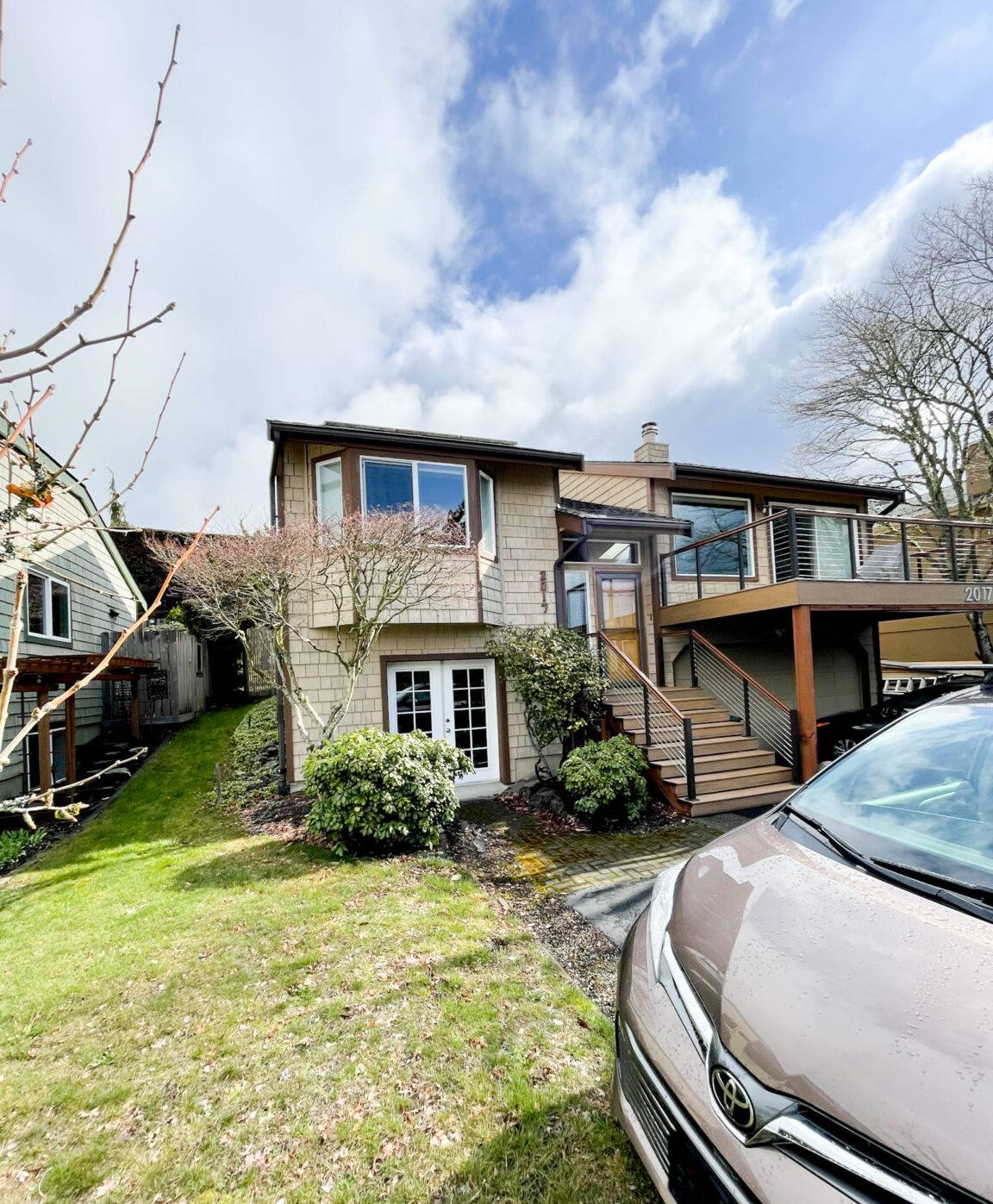
What "Custom" Actually Means for This Neighborhood
"Custom" gets thrown around loosely in this trade. For Edgemoor, it has a specific, practical meaning: windows built to the exact openings and exposure conditions of your particular house, rather than pulled off a shelf in a standard size and forced to fit.
Non-Standard Openings in Older Homes
A lot of homes in this area were built decades ago, before manufacturers standardized window sizes the way they do now. Openings can be slightly out of square, framed to dimensions that don't match anything currently sold off-the-shelf, or sized for glass styles that aren't made anymore. Custom manufacturing means the window is built to your opening — not your opening reworked to fit a stock window. That matters because forcing a stock unit into an odd-sized opening usually means extra shimming, extra caulk, and extra failure points down the road.
Waterfront and View-Facing Exposures
Homes with a water view or a west/southwest exposure take the brunt of both the salt air and the driving rain. Larger view windows and picture units on these elevations need heavier-duty weatherstripping, additional flashing detail, and glass packages rated for higher wind-driven water exposure than a window on a sheltered north wall of the same house. Treating every elevation of a house the same is one of the more common mistakes in this trade — and one of the more expensive to fix later.
Frame Materials That Actually Hold Up Here
Frame material is the single biggest factor in how a window handles salt air and prolonged moisture. There's no perfect material for every situation, but some hold up to this specific climate better than others.
| Material | How It Handles Salt Air & Rain | Maintenance | Where It Fits Best |
|---|---|---|---|
| Vinyl | Resists corrosion well; won't rot or rust | Low — occasional cleaning | Most standard replacements, budget-conscious projects |
| Fiberglass | Excellent — very stable in temperature and moisture swings, resists salt corrosion | Low | Exposed elevations, larger custom units, long-term durability |
| Wood-clad | Good if cladding and seals stay intact; interior wood still needs protection from condensation | Higher — cladding seams need periodic inspection | Homes prioritizing interior wood appearance |
| Aluminum | Prone to corrosion in salt air unless heavily coated; conducts cold | Moderate to high | Rarely our first recommendation in this specific climate |
We steer most Edgemoor projects toward vinyl or fiberglass specifically because of the salt air and moisture load, not because other materials are inherently bad products. Wood-clad windows can still be the right call when a homeowner wants a specific interior finish — it just means going in with clear eyes about the extra upkeep that exposure here demands.
Glass and Weatherproofing Choices That Matter Here
Glass package decisions are often treated as an energy-efficiency conversation, but in this climate they're just as much about moisture management.
- Low-E coatings reduce heat loss and help limit interior condensation on cold, damp days — a real issue in a climate with this much sustained humidity.
- Argon or krypton gas fill improves insulation between panes, which also reduces the interior temperature swings that drive condensation.
- Warm-edge spacers resist seal failure better over time than older aluminum spacers, which matters when a window is exposed to constant humidity and temperature cycling.
- Laminated or impact-rated glass is worth discussing on exposed, water-facing elevations where wind-driven debris is more of a factor.
None of these are exotic upgrades — they're standard options on most quality window lines. The difference is choosing the combination that actually addresses salt air and sustained moisture, rather than defaulting to whatever package is cheapest or most heavily marketed.
What a Correct Installation Involves
The window unit itself is maybe half the job. The other half — flashing, sealing, and integration with the existing wall — is where most window failures in this climate actually start. A correct installation in a house exposed to driving rain and salt air includes:
- Removing old caulk and sealant fully rather than caulking over it
- Inspecting the sill and framing for existing rot or moisture damage before the new unit goes in
- Installing proper flashing tape and pan flashing at the sill, not just relying on caulk
- Using sealants rated for the temperature and moisture range of this climate, not generic hardware-store caulk
- Confirming the unit is level, plumb, and square before final fastening
- Sealing and insulating the gap between the frame and rough opening correctly — not overpacked, not left open
- Finishing exterior trim in a way that sheds water away from the window rather than channeling it toward the frame
Skip any one of these steps and you can end up with a good window that still leaks, fogs, or rots out its surrounding trim within a few years — which is a common story we hear from homeowners who had windows installed by a crew unfamiliar with this specific exposure.
Our Process, Start to Finish
We keep the process straightforward and specific to your house rather than running a one-size-fits-all script.
- On-site assessment. We look at every window opening individually, note exposure direction, existing damage, and framing condition — not just count units off a floor plan.
- Material and glass recommendation. Based on that assessment, we recommend frame material and glass package by elevation, not a blanket choice for the whole house.
- Custom manufacturing. Units are built to your exact openings.
- Removal and inspection. Old windows come out carefully, and we check the framing underneath for hidden rot or moisture damage before anything new goes in.
- Installation and flashing. Full flashing and sealing detail as outlined above, on every unit, every time.
- Final walkthrough. We check operation, sealing, and finish work with you before calling the job done.
Signs Your Current Windows Are Already Losing the Battle
Because moisture damage in this climate develops slowly, a lot of homeowners don't realize how far along it is until they're pointed at what to look for.
- Fogging or moisture between panes (a sign the seal has failed)
- Soft or discolored wood trim around the frame
- Persistent black or green staining on the sill or exterior trim, even after cleaning
- Windows that stick, won't latch fully, or have visibly warped frames
- Noticeable draft or cold spot near the window in winter
- Peeling paint or caulk pulling away from the frame edges
Any one of these is worth a look. A few of them together usually means water has already gotten past the surface and into the framing, which turns a window job into a repair job if it sits too long.
Cost Factors to Understand Before You Budget
| Factor | Why It Moves the Price |
|---|---|
| Frame material | Vinyl is typically the most budget-friendly; fiberglass and wood-clad cost more upfront but bring different durability and maintenance trade-offs |
| Glass package | Low-E, gas fill, and impact-rated options add cost but address real moisture and exposure issues in this climate |
| Opening condition | Existing rot or framing damage found during removal adds repair scope beyond the window itself |
| Window size and style | Larger picture windows and custom shapes cost more to manufacture and install than standard operable units |
| Number of exposed elevations | Water- and wind-facing sides may need upgraded flashing or glass specs, which adds labor and material |
We don't quote a house without seeing it, because these factors vary enough from one Edgemoor property to the next that a generic per-window estimate isn't honest. What we can tell you upfront is which factors are likely to matter most for your specific exposure once we've looked at it.
Why a Crew That Already Works This Area Matters
Window installation isn't identical everywhere. A crew that mostly works drier inland climates can install a technically correct window and still miss the details that matter specifically here — the flashing sequence that accounts for wind-driven rain, the material call that accounts for salt air, the attention to moss and moisture buildup on trim. Working regularly in Sudden Valley and the surrounding Whatcom County coastline means we're not guessing at how a house in this specific setting behaves over time — we've seen how these materials and installation details hold up in this exact climate, on this exact type of housing stock, and we adjust our recommendations accordingly.
If you're weighing a window project for a home in Edgemoor, we're glad to come take a look and walk you through what your specific openings and exposure actually need — no pressure, no generic sales pitch, just a straight assessment and a free estimate.