 Sudden Valley Window
 Fairhaven Decks Face a Different Set of Problems
Fairhaven sits close enough to the water that salt-laden air is part of daily life for any exterior wood or fastener on your property. Add in Whatcom County's long, wet winters and the shoulder-season drizzle that never quite stops, and a deck here ages differently than one fifty miles inland. We repair decks throughout the Sudden Valley area, and the calls from Fairhaven tend to follow a pattern: fasteners that rusted faster than expected, boards that stayed damp long enough to soften, and moss that took hold in spots the sun never reaches.
None of that means a Fairhaven deck is doomed to constant repair. It means the repair has to account for the actual conditions the structure lives in, not a generic checklist. That's the difference between a fix that holds for another decade and one you're paying for again in three years.
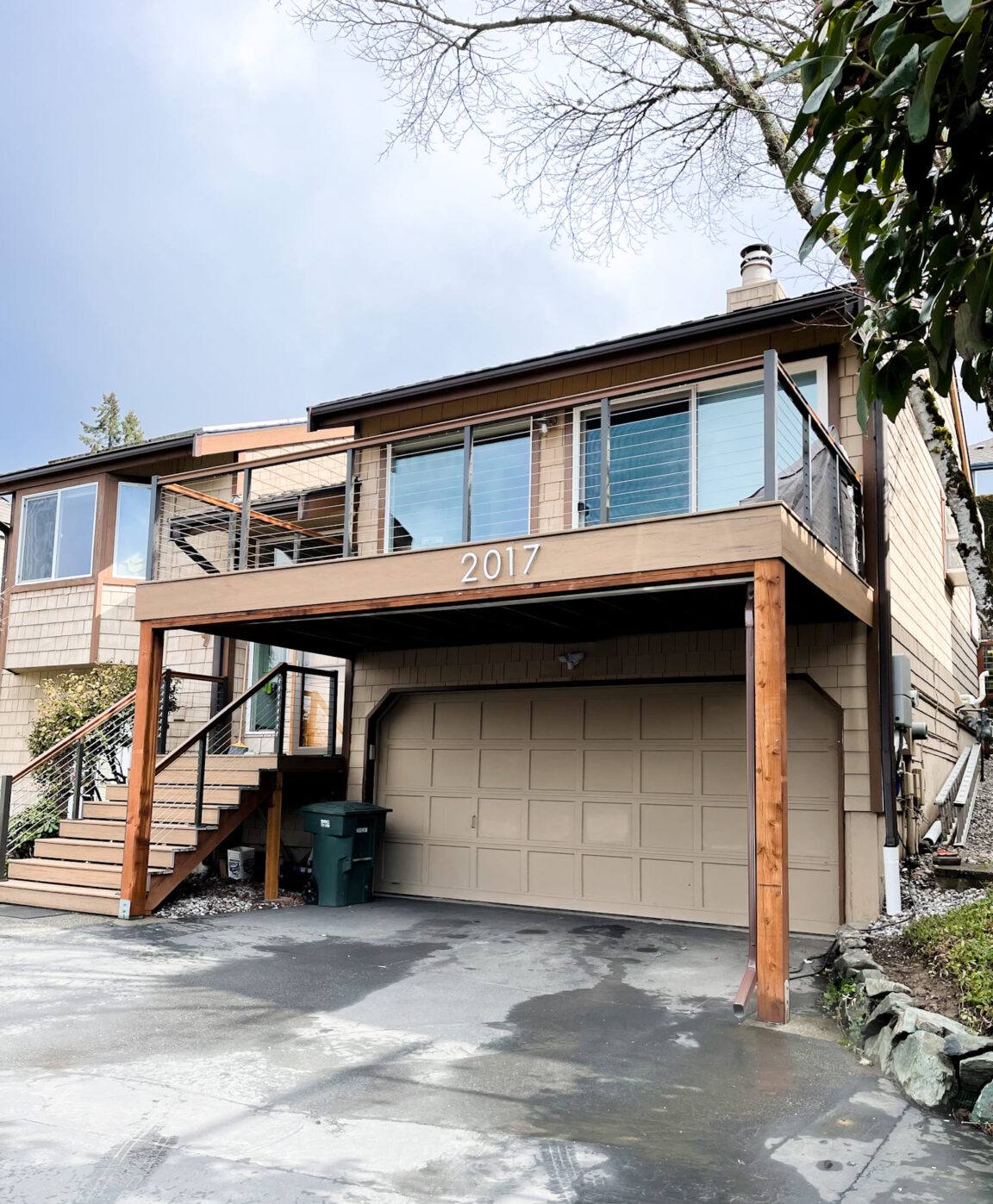
Signs Your Deck Needs Repair, Not Replacement
Most decks we look at don't need to be torn out. They need specific components addressed before a small problem becomes a structural one. Watch for these:
- Boards that feel spongy, spring back slowly underfoot, or show dark staining along the edges
- Visible rust streaks running down from fastener heads or ledger bolts
- Moss or algae holding moisture on the north or shaded side of the deck longer than the rest
- Gaps opening up between the deck and the house at the ledger board
- Railings that flex or posts that feel loose when pushed
- Stair stringers with visible splitting near the fastener points
Any one of these on its own is usually a straightforward repair. Several at once, especially combined with soft framing underneath, is when we talk honestly about whether repair still makes sense or whether a partial rebuild is the better money.
What Salt Air and Moss Season Actually Do to a Deck
Salt Air and Fasteners
Airborne salt accelerates corrosion on any exposed metal — nails, screws, joist hangers, and structural bolts. A fastener rated for general exterior use inland can start showing rust within a few years this close to the water. Once a fastener corrodes, it loses holding strength long before it looks obviously broken, which is why we check fastener condition directly rather than assuming a deck's age tells the whole story.
Driving Rain and Water Intrusion
Whatcom County's rain doesn't just fall straight down — wind-driven rain gets pushed sideways into gaps, ledger connections, and butt joints between boards. Water that gets in and can't drain or dry out is what causes rot, not rain itself. A correct repair always looks at drainage and airflow underneath the deck, not just the visible surface.
Moss and Shade
Decks with tree cover or a north-facing exposure hold moisture longer, and moss follows. Moss itself isn't structural damage, but it keeps wood wet against the grain for weeks at a time, which is exactly the condition that leads to soft, rotting boards. A deck that gets moss every year needs a different maintenance rhythm than one in full sun.
What a Correct Deck Repair Involves
A repair that actually lasts starts underneath the deck, not on top of it. Here's what we check on every job, whether the homeowner asked about it or not:
| Component | What we check | Why it matters here |
|---|---|---|
| Ledger board & flashing | Attachment to the house, flashing condition, signs of water tracking behind siding | The single most common source of hidden rot in this climate |
| Joists & beams | Softness, cracking, hanger corrosion | Structural — carries the entire load of the deck |
| Fasteners & hardware | Rust, loosening, correct rating for exterior/coastal use | Salt air shortens the service life of standard hardware |
| Decking boards | Softness, cupping, gaps, staining | First thing to fail but rarely the whole story |
| Railings & posts | Post base rot, connection strength, code-height compliance | Safety item, not cosmetic |
| Drainage & ventilation | Grading underneath, gaps between boards, debris buildup | Controls how fast wood dries after rain |
Skipping the underside inspection is the most common shortcut in deck repair, and it's also the reason people end up paying for the same problem twice. We don't quote a repair without getting underneath the deck first.
Repair vs. Replace: How We Help You Decide
| Factor | Favors repair | Favors replacement |
|---|---|---|
| Framing condition | Joists and beams are solid, only surface boards affected | Widespread soft or rotted framing |
| Age of structure | Under 15-20 years, built to a reasonable standard | Older deck with outdated framing spacing or connections |
| Extent of damage | Isolated to a few boards, a stair, or a railing section | Damage spread across most of the surface |
| Ledger connection | Sound, properly flashed | Failed or never correctly flashed to begin with |
| Budget goal | Extend service life at lower cost | Want a different footprint, material, or layout anyway |
Repair costs for a typical board or hardware fix generally run a few hundred to a couple thousand dollars depending on scope. Larger structural repairs involving joists, beams, or ledger reflashing cost more because they involve removing decking to get underneath. We'll always tell you plainly which category your deck falls into before we start.
Our Deck Repair Process
- On-site inspection, including getting underneath the deck to check framing and the ledger connection
- Written assessment showing exactly what's failing and what's still sound — no bundling in work you don't need
- Straightforward pricing broken out by component so you can see what you're paying for
- Repair work: replacing boards, hardware, framing sections, or railings as needed, with attention to drainage as we go
- Final check of fastener tightness, railing safety, and board spacing before we call it done
We don't upsell a full rebuild when a targeted repair will genuinely hold. We also won't patch over a rotted joist just to keep the price low — if something's a safety issue, we'll say so directly and explain why.
Materials We Use and Why
For framing repairs, we use pressure-treated lumber rated for ground contact where it's structurally appropriate, and we specify stainless or heavy hot-dip galvanized fasteners in areas exposed to salt air rather than standard coated screws — the upcharge is small compared to redoing the work in five years. For decking surface repairs, the right material depends on what's already there and what the homeowner wants going forward.
Wood vs. Composite for Repairs
Matching existing wood decking with new wood boards keeps the repair invisible and the cost down, but it comes with the same maintenance the rest of the deck needs — periodic sealing and moss control. Composite boards resist moisture and moss better and need less upkeep, but they cost more up front and won't match older wood decking exactly. We'll walk through both honestly rather than pushing whichever is easier for us to install.
Maintenance That Actually Extends the Life of a Repair
A good repair is only half the equation. What you do afterward determines whether it lasts. For Fairhaven's climate specifically:
- Sweep debris and standing moss off the deck surface, especially in shaded corners, at least twice a year
- Keep gutters and downspouts clear so runoff isn't draining directly onto or under the deck
- Check fastener heads for early rust staining once a year — it's cheaper to replace a few screws than a joist
- Reseal or refinish wood decking on the schedule the product calls for, not just when it looks faded
- Trim back vegetation that keeps sections of the deck shaded and damp longer than the rest
- Address soft spots or loose railings as soon as you notice them rather than waiting for the next dry season
Why a Crew That Already Works Fairhaven Makes a Difference
Deck repair isn't complicated in theory, but getting it right in this specific environment means recognizing salt-related corrosion patterns, knowing which ledger flashing failures show up repeatedly in this kind of weather, and not being surprised by moss or moisture damage that a contractor from a drier region might underestimate. We work on decks throughout Sudden Valley and the surrounding Whatcom County area regularly, and that familiarity shows up in faster, more accurate assessments and repairs that account for what this climate actually does to a structure over time.
If you're seeing soft boards, rust stains, or a deck that just doesn't feel as solid as it used to, we're happy to take a look. Estimates are free, there's no pressure to book anything on the spot, and you'll get a straight answer about whether you're looking at a simple repair or something bigger — use the form below to get started.