 Sudden Valley Window
 Metal Roofing in Deming: What This Climate Actually Demands
Deming sits in the wooded, river-adjacent part of Whatcom County, close enough to Sudden Valley that the two areas share the same weather pattern: long wet winters, heavy tree cover, and a moss season that can run eight or nine months out of the year. A metal roof installed here doesn't just need to shed water — it needs to handle standing shade, conifer duff, and repeated freeze-thaw cycles without trapping moisture underneath the panels. Get the underlayment, flashing, and ventilation wrong, and a metal roof can actually trap moisture worse than a well-installed asphalt roof. Get it right, and it's one of the lowest-maintenance roofing decisions a homeowner in this area can make.
We're not writing this as a generic pitch for metal roofing. We're writing it because Deming's combination of dense canopy, valley humidity, and driving rain off the foothills creates specific failure points that a crew unfamiliar with the area tends to miss.
Why Metal Roofing Fits Deming Homes Specifically
Moss and Debris Load
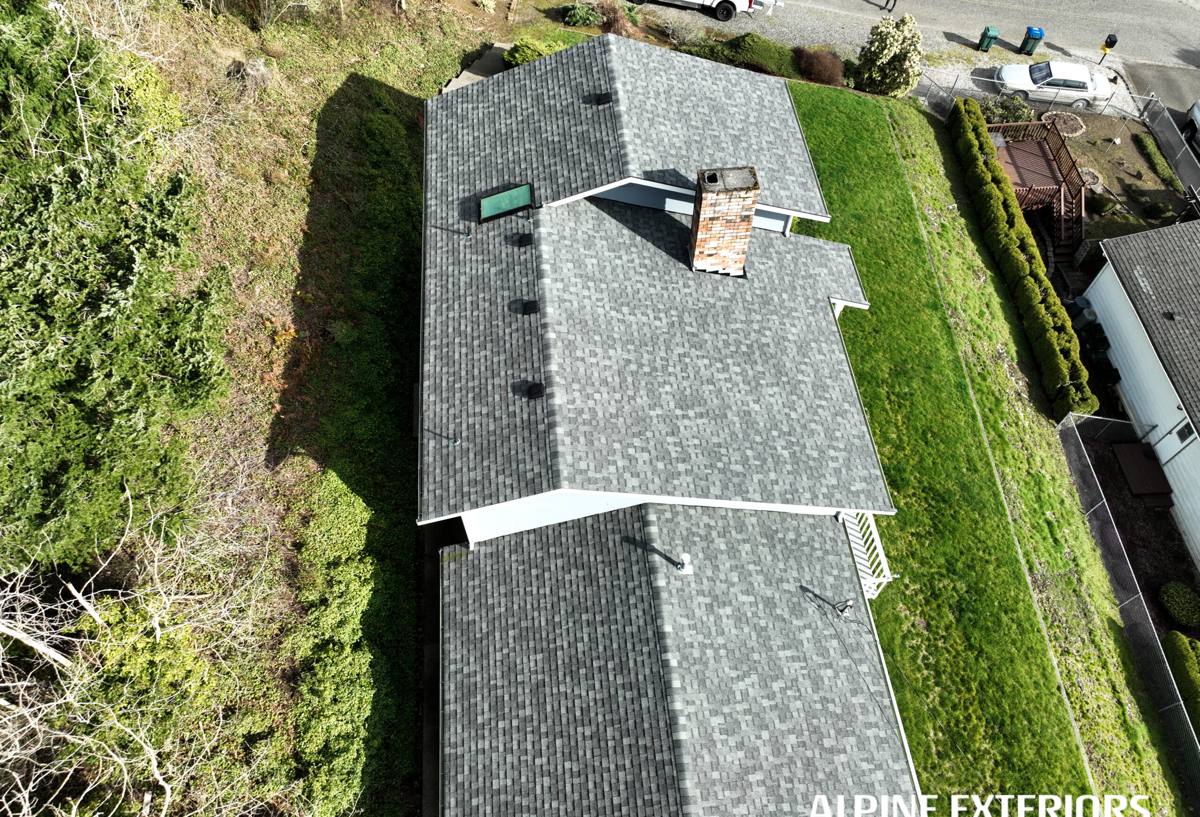
Homes tucked under fir and cedar canopy accumulate needle litter and moss faster than open, sun-exposed lots. Asphalt shingles give moss something to grip — the granular surface and butt-edge seams hold moisture and organic debris. Steel and aluminum panels are smooth and non-porous, so moss has almost nothing to anchor to. It can still form in shaded valleys where two roof planes meet, but it wipes or rinses off instead of rooting into the material.
Rain Volume and Runoff Speed
Whatcom County gets sustained, driving rain rather than short bursts, and a wooded lot means water often arrives already carrying pine needles and grit. Metal roofing's steep-shed profile and slicker surface move water off the roof faster than shingles, which reduces the time debris has to collect at valleys, eaves, and gutter lines.
Snow and Ice at Elevation
Deming sits closer to the foothills than the coast, and winter systems here can drop wetter, heavier snow than areas nearer the water. Metal sheds snow in slides rather than holding it in a compacted mat the way shingles do, which reduces prolonged ice-dam pressure at the eaves — as long as the eave flashing and ice-and-water underlayment are detailed correctly for that shedding behavior.
Choosing the Right Metal Roofing System
"Metal roofing" isn't one product — the panel type changes the cost, the maintenance profile, and how well it performs under a tree canopy. Here's how the common systems compare for a Deming property:
| System | Best for | Trade-offs |
|---|---|---|
| Standing seam (concealed fastener) | Long-term, low-maintenance roofs under heavy tree cover | Higher upfront cost; requires skilled installation for clean seams |
| Exposed-fastener panel | Outbuildings, shops, budget-conscious re-roofs | Fasteners can loosen or gasket seals can degrade over time, needing periodic checks |
| Stone-coated steel | Homeowners who want a shake or shingle look with metal's durability | Textured surface can hold more debris than smooth standing seam |
| Aluminum standing seam | Properties wanting the best corrosion resistance | Softer material, more careful handling needed during install; higher material cost |
For most Deming homes we recommend standing seam with a concealed fastener system. The smooth, unbroken surface sheds moss and needle debris best, and there's no exposed fastener for water to work its way around over the years. Where budget is the deciding factor, a quality exposed-fastener panel is still a major upgrade over aging shingles — it just asks for a bit more attention down the road.
Steel vs. Aluminum: An Honest Comparison
Steel panels (galvanized or Galvalume-coated, then painted) are the standard choice for most residential jobs — strong, widely available, and cost-effective. Aluminum resists corrosion even better and never rusts even if the paint is scratched, which matters most on properties closer to open water or with heavy salt-air exposure. For most Deming homes set back from the water, quality coated steel is the practical choice; aluminum earns its higher price mainly on more exposed or coastal-adjacent sites.
What a Correct Metal Roof Installation Actually Involves
Metal roofing fails early almost exclusively because of installation shortcuts, not the material itself. A correct job in this climate includes:
- Full underlayment coverage — synthetic underlayment across the whole deck, with self-adhered ice-and-water membrane at eaves, valleys, and any low-slope transitions.
- Proper deck inspection — checking for soft or rotted sheathing before panels go down, since metal will hide a bad deck instead of fixing it.
- Correct fastener spacing and type — matched to panel profile and local wind exposure, not a generic pattern.
- Custom-formed flashing — at every valley, chimney, skylight, and wall transition, fabricated to fit rather than pulled from a generic stock bend.
- Ventilation continuity — ridge and soffit venting sized to keep the attic dry, which matters even more under a metal roof because condensation risk is different from asphalt.
- Panel expansion allowance — metal moves with temperature swings, and clips or fastener slots need to account for that movement so panels don't oil-can or pull loose over time.
Skipping any one of these is how a metal roof ends up with the same leaks people install metal to avoid.
Our Process, Start to Finish
- On-site assessment — we walk the roof and attic, check deck condition, existing ventilation, and note tree cover and drainage patterns specific to your lot.
- System recommendation — we walk you through panel and finish options based on your budget, roof pitch, and how much shade the property gets.
- Written estimate — clear scope, materials, and timeline, no vague allowances.
- Tear-off and deck repair — old roofing removed, deck inspected, and any soft sheathing replaced before anything new goes down.
- Underlayment and flashing — full coverage, custom-formed flashing at every transition point.
- Panel installation — installed to manufacturer spec with correct fastening and expansion allowance.
- Final walkthrough and cleanup — site cleared of debris and fasteners, and we walk the finished roof with you before we call it done.
Maintenance Under Deming's Tree Canopy
A metal roof needs far less maintenance than shingles, but "far less" doesn't mean "none" — especially under heavy conifer cover. What actually matters:
- Clear needle and leaf buildup from valleys and behind chimneys once or twice a year — that's where debris collects even on a smooth panel.
- Keep gutters clear so water has somewhere to go once it leaves the panel edge; a clogged gutter can back water up under the drip edge.
- Check sealant at penetrations (vents, flashing) every few years — sealants age faster than the metal itself.
- Trim overhanging branches where practical, both to reduce debris load and to limit abrasion during wind.
- Rinse visible moss or algae in shaded valleys with a garden hose — never pressure-wash a metal roof, which can drive water under seams or damage the finish.
Signs Your Current Roof Needs Replacing
Whether you're on aging asphalt or an older metal roof, here's what tells us a replacement — not a repair — is the honest recommendation:
- Granule loss or bald patches on shingles, especially on south- and west-facing slopes
- Moss growth that's lifted or separated shingle edges rather than just sitting on the surface
- Soft spots or sag felt underfoot on the roof deck
- Rust streaking, loose fasteners, or oil-canning (visible waviness) on an existing metal roof
- Daylight visible through the attic decking, or damp insulation after a storm
- Repeated leaks at the same flashing point despite prior patch repairs
Cost Factors for a Deming Metal Roof
Every roof is different, but these are the variables that actually move the price:
| Factor | Why it matters |
|---|---|
| Panel system | Standing seam costs more than exposed-fastener panel per square foot, mainly due to labor |
| Roof pitch and complexity | Steeper roofs and more valleys/dormers mean more custom flashing and labor time |
| Deck condition | Rotted or soft sheathing found during tear-off adds repair cost before panels go on |
| Material (steel vs. aluminum) | Aluminum runs higher for material cost and corrosion resistance |
| Access and tree cover | Limited access or heavy overhead branches can add setup and safety time |
We'd rather walk your roof and give you real numbers than quote a range that doesn't mean much for your specific property. That said, metal roofing is a bigger upfront investment than asphalt — the payoff is in the decades of low maintenance and moss resistance that follow, particularly under conditions like Deming's canopy and rainfall.
Why a Crew That Already Works Deming Matters
Roofing crews that mostly work drier, open-lot areas don't always account for how much shade and moisture change a metal roof's needs. A crew that regularly works Deming and the greater Sudden Valley area already knows which roof planes hold moss longest, how much ventilation a shaded attic actually needs, and where debris tends to pile up around valleys and chimneys on wooded lots. That local pattern recognition shows up in the details — flashing choices, fastener spacing, underlayment placement — that separate a metal roof that lasts thirty-plus years from one that starts leaking in five.
We also know the practical side: permitting through Whatcom County, coordinating around access on rural driveways, and scheduling around the wetter months so tear-off and dry-in happen without exposing your deck to a surprise storm.
Get a Straight Answer on Your Roof
If you're weighing metal roofing for a Deming property, we're glad to come take a look, walk the roof and attic, and give you an honest read on what your home actually needs — no pressure, no upsell. Use the form below to request a free estimate and we'll get back to you to schedule a time that works.