 Sudden Valley Window
 Why Ferndale Roofs Wear Out the Way They Do
Ferndale sits close enough to Bellingham Bay and the Strait of Georgia that salt-laden air is a real factor in how roofing materials age here, not just a talking point. Add in the long stretch of driving rain that Whatcom County sees from fall through spring, plus a moss season that can run eight months or more under the right combination of shade and moisture, and you get a roof environment that's harder on materials than most manufacturers' warranty testing accounts for. Metal fasteners corrode faster near the water. Shingles stay damp longer under tree cover. Moss doesn't just sit on the surface — it works into the granule layer and lifts shingle edges, which is exactly where wind-driven rain wants to get underneath.
None of this means Ferndale homes need exotic materials or constant babying. It means the replacement has to be specified and installed with this specific climate in mind — right underlayment, right ventilation, right fastener hardware, right attention to the shaded and low-slope sections where moss and moisture like to collect. A roof built for a dry inland climate and simply installed here will underperform, even if every shingle is nailed correctly.
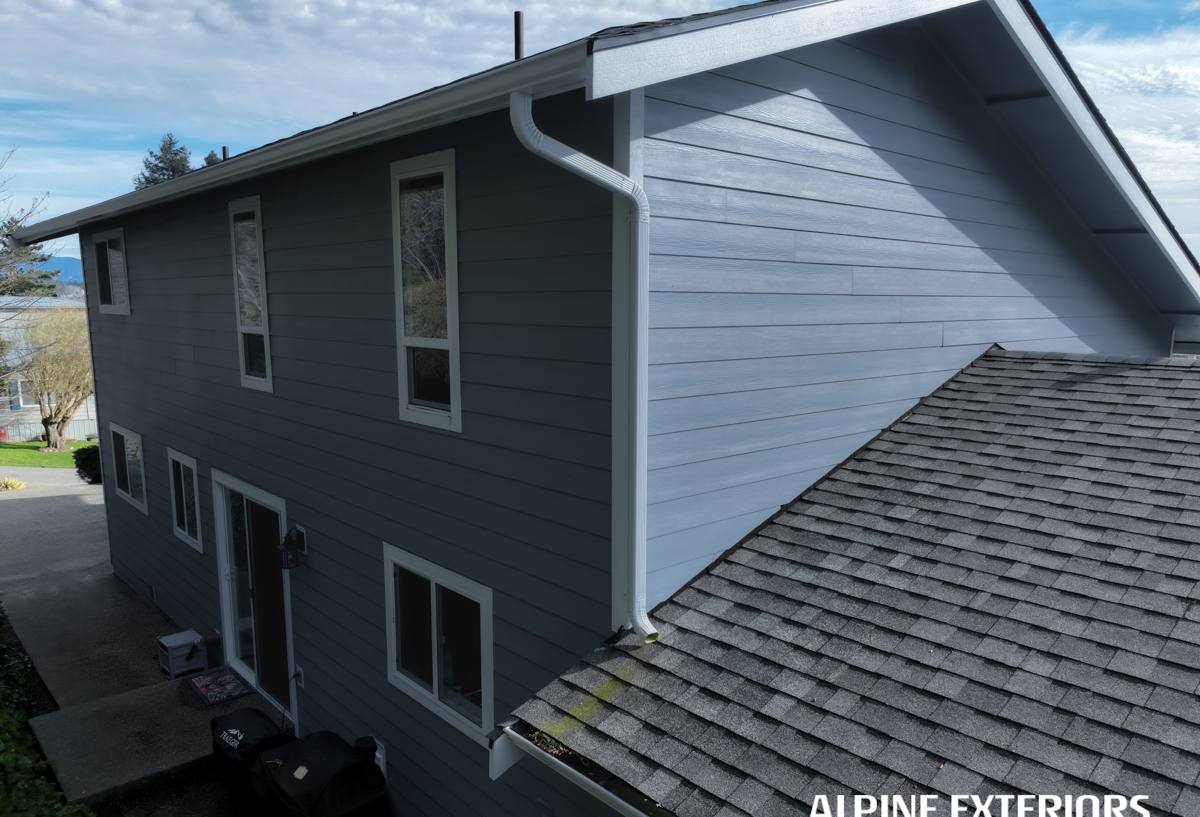
Signs a Ferndale Roof Needs Replacement, Not Another Repair
Most roofs give warning signs well before a leak shows up inside. In this climate, the pattern is usually moisture-related rather than storm-damage-related, since we don't get much hail and wind events tend to be gradual rather than catastrophic.
- Granules collecting in gutters or at downspout outlets, especially after the first hard rains of fall
- Moss or dark algae streaking that keeps coming back within a season or two of cleaning
- Shingles that look curled, cupped, or lifted at the edges, particularly on north-facing or shaded slopes
- Soft spots underfoot or visible sagging along the roofline
- Daylight visible through the attic sheathing, or damp insulation near the eaves
- A roof that's 18–25 years old on standard asphalt shingle, or showing wear well ahead of its rated life
One or two of these findings usually means a repair is still the right call. Several at once, especially combined with age, is when a full replacement starts making more financial sense than chasing leaks one at a time.
What a Correct Roof Replacement Involves Here
A roof replacement done right for this part of Whatcom County isn't just tearing off old shingles and nailing down new ones. The layers underneath and the details around the edges are what actually determine how the roof holds up against driving rain and a long wet season.
Underlayment and Moisture Protection
We use synthetic underlayment as the standard field layer, with self-adhering ice-and-water membrane at the vulnerable points — eaves, valleys, around chimneys and skylights, and low-slope transitions. In a climate where wind can push rain sideways under shingle tabs, that membrane at the perimeter matters more than the shingle brand printed on the wrapper.
Ventilation
Trapped moisture in the attic is one of the fastest ways to shorten a roof's life from underneath, and it's an easy thing for a rushed re-roof to skip. Balanced intake at the eaves and exhaust at the ridge keeps the deck dry and helps prevent the kind of condensation that rots sheathing quietly for years before anyone notices a leak.
Fasteners and Flashing
Given the salt content in coastal air, we don't use bargain-grade fasteners or flashing on these jobs. Corrosion-resistant nails and properly formed step and counter-flashing at walls, chimneys, and skylights cost more upfront but avoid the slow rust-through failures that show up as leaks five or ten years later, right when a homeowner assumes the roof is still "new."
Material Options for This Climate
There's no single correct material for every Ferndale home — it depends on roof pitch, budget, tree cover, and how long you plan to own the house. Here's how the common options actually compare in a salt-air, high-moisture environment.
| Material | Moss & moisture resistance | Typical lifespan here | Notes |
|---|---|---|---|
| Standard asphalt composition shingle | Moderate — needs periodic moss treatment | 18–25 years | Most common choice; wide color range; lowest upfront cost |
| Architectural/laminate shingle | Good — thicker profile sheds moisture better | 25–30 years | Better wind rating and appearance; modest cost step up from standard |
| Metal (standing seam or panel) | Very good — minimal moss adhesion on smooth panels | 40–50+ years | Higher upfront cost; needs coastal-rated fasteners and coatings |
| Cedar shake | Poor to moderate without regular maintenance | Varies widely | Requires more upkeep in this moisture and moss environment; we're upfront about that maintenance burden before recommending it |
We don't push cedar shake on homes here as a default recommendation — not because it's a bad product, but because it demands a level of ongoing moss and moisture maintenance that most homeowners underestimate when they're comparing it to shingle or metal on looks alone. If a homeowner wants that appearance and is prepared for the upkeep, we'll install it correctly and explain what that upkeep involves.
Our Process, Start to Finish
- On-site inspection. We walk the roof (or use a lift/drone where pitch or access requires it), check the attic from inside, and photograph problem areas so you can see exactly what we're finding.
- Written estimate. Material options, scope, and price broken down clearly — no vague lump-sum with no explanation of what's included.
- Scheduling around the weather. Given how much rain this area gets, we plan tear-off and dry-in around forecast windows so your home isn't left exposed longer than necessary.
- Tear-off and deck inspection. Old material comes off, and we check the deck itself for rot or soft spots before anything new goes down — this is where hidden moisture damage gets found and fixed.
- Underlayment, flashing, and ventilation installed. The layers that actually determine long-term performance.
- New roofing material installed to manufacturer spec and local wind/moisture conditions.
- Cleanup and magnetic sweep for stray nails, plus a final walkthrough with you before we consider the job done.
What Drives the Cost
Every roof is different, so we won't quote a number without seeing yours, but these are the factors that move the price up or down on most Ferndale projects.
| Factor | Effect on cost |
|---|---|
| Roof size and number of facets | More square footage and more valleys/hips means more labor and material |
| Pitch and access | Steep or hard-to-access roofs require more safety equipment and time |
| Existing layers to remove | Tear-off of multiple old layers adds disposal and labor cost |
| Deck condition | Rotted sheathing found during tear-off adds material and labor to replace it |
| Material choice | Standard shingle is the budget option; metal costs more upfront but lasts longer |
| Ventilation and flashing needs | Older homes often need ventilation upgrades or additional flashing work |
Broadly, a straightforward asphalt shingle replacement on an average single-family home in this area tends to land in the mid five figures, with metal running higher and smaller or simpler roofs running lower. Those are general ranges, not a quote — the only way to get an accurate number is a look at your actual roof.
Why a Crew That Already Works This Area Matters
Sudden Valley Window Co's crews work throughout Whatcom County, including Ferndale, regularly enough that we're not guessing at how this climate treats a roof — we're seeing it on job after job. That familiarity shows up in small decisions: which valleys tend to collect moss and need extra membrane, how much ventilation an older home in this area actually needs versus what the building code minimum allows, and which fastener and flashing upgrades are worth the extra cost given what salt air does to standard hardware over time. A crew that only occasionally works this far north doesn't build up that pattern recognition, and it tends to show up later as callbacks and premature wear.
We also stand behind the work with a straightforward workmanship warranty and are available if something comes up after the job is finished — not just during the install.
Keeping a New Roof Performing Long-Term
A correctly installed roof still benefits from basic upkeep in this climate, especially through moss season. None of this is complicated, but skipping it shortens the life of even a well-built roof.
- Have moss growth treated or removed before it establishes under shingle edges, rather than after it's visible from the street
- Keep gutters clear so water isn't backing up under the roof edge during heavy rain
- Trim back overhanging branches to reduce shade and debris buildup on north-facing slopes
- Walk the attic once or twice a year (or have us do it) to check for daylight, damp insulation, or musty smell
- Address small flashing or sealant issues right away — in this rainfall pattern, small gaps don't stay small for long
Get a Straightforward Estimate
If your Ferndale roof is showing its age, or you just want an honest opinion on whether repair or replacement makes more sense right now, we're happy to take a look. The estimate is free, there's no pressure, and you'll get a clear explanation of what we find — use the form below to get started.