 Sudden Valley Window
 Building Decks That Actually Hold Up in Sehome
Sehome homeowners near Sudden Valley already know what the rest of Whatcom County deals with every winter: months of steady drizzle, damp air off Lake Whatcom, and a moss season that seems to start earlier every year. A deck built without that reality in mind will look fine for a season or two and then start showing problems — soft spots underfoot, green film on the boards, rust streaks around the fasteners, gaps that trap standing water. A deck built for this specific climate handles all of it, year after year, without turning into a maintenance project every spring.
This page covers what actually goes into a deck that's built for Sehome's conditions: material choices, framing details, drainage, and the maintenance a homeowner should realistically expect. It's meant to help you make an informed decision, not to sell you the most expensive option on the list.
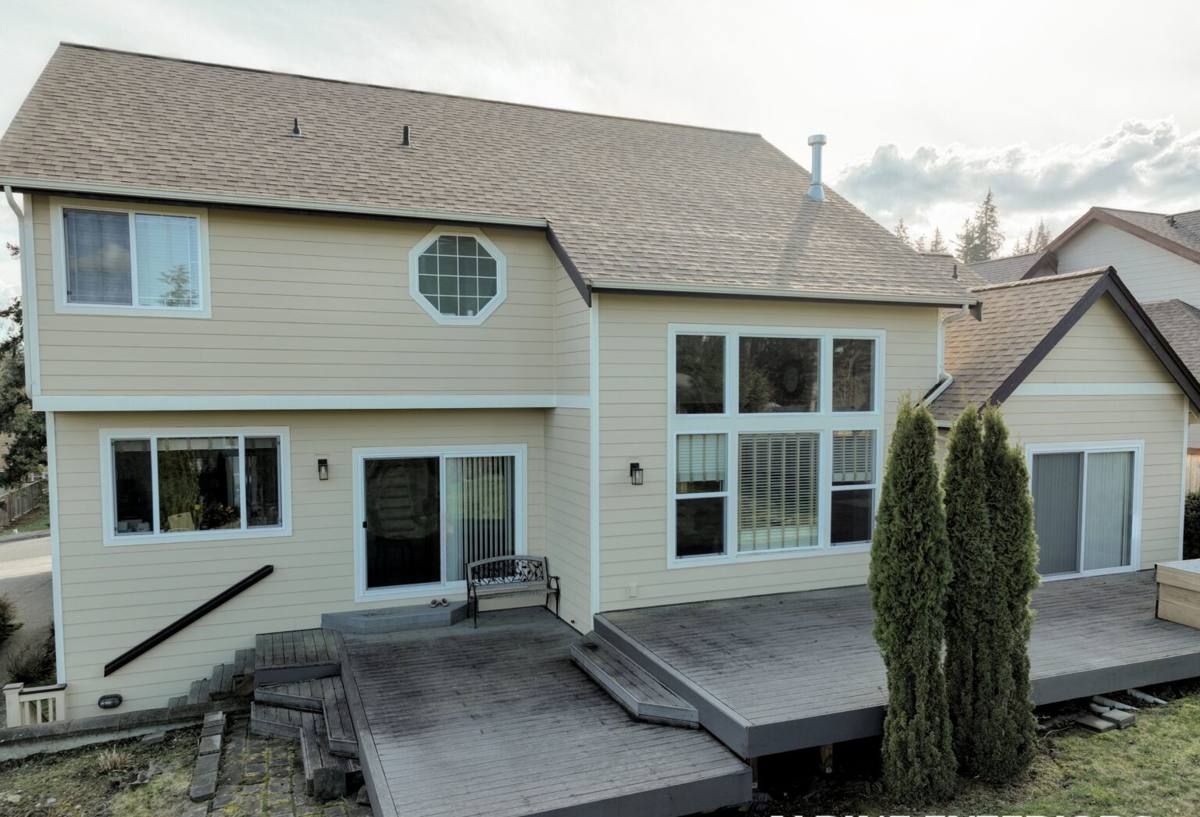
What This Climate Does to a Deck Over Time
Sudden Valley sits in a pocket of Whatcom County that gets consistent moisture nearly year-round. That's not unusual for the region, but it does mean a few specific things for anything built outdoors:
- Constant dampness plus shade from surrounding trees creates ideal conditions for moss and algae growth on horizontal surfaces.
- Wood that stays wet longer than it stays dry starts to lose structural integrity from the inside out, well before it looks bad on the surface.
- Metal fasteners and hardware that aren't rated for wet exposure corrode faster here than they would in a drier climate, and rust stains show up on lighter decking within a year or two.
- Freeze-thaw cycles, even mild ones, work moisture into any small gap or crack and widen it over time.
None of this means a deck can't last decades in Sehome — it means the build has to account for moisture from the ground up, not just at the surface.
Choosing Decking Material for a Wet Climate
There's no single "best" decking material — the right choice depends on your budget, how much upkeep you're willing to do, and how much shade the deck gets. Here's how the common options actually perform in this kind of climate:
| Material | Upfront Cost | Moss & Moisture Resistance | Maintenance | Realistic Lifespan Here |
|---|---|---|---|---|
| Pressure-treated wood | Lowest | Fair — needs sealing to perform well | Annual cleaning, re-sealing every 1-2 years | 10-15 years with upkeep |
| Cedar | Moderate | Good natural resistance, but still absorbs moisture | Cleaning and oiling every 1-2 years to hold color and resist moss | 15-20 years with upkeep |
| Composite decking | Higher | Very good — doesn't absorb water like wood | Periodic washing to keep surface algae/moss from taking hold | 25-30+ years |
| PVC decking | Highest | Excellent — fully synthetic, no wood fiber to hold moisture | Lowest of all options — occasional rinse | 30+ years |
Wood is a legitimate choice for homeowners who want the traditional look and are willing to keep up with sealing on a schedule. Composite and PVC cost more up front but hold up with far less intervention — a real consideration when your deck spends half the year damp. We'll walk you through the actual trade-offs for your specific deck rather than pushing one product line.
A Note on Surface Texture
Smooth, glossy decking surfaces get slick fast once moss or algae gets a foothold, which is a real safety issue on stairs and ramps. Textured or grooved boards — in wood or composite — give better footing during our wet months and are worth the small extra cost, especially on stairs.
Framing and Substructure: Where Deck Failures Actually Start
Most deck problems homeowners notice on the surface — bounce, sag, soft boards — trace back to the framing underneath, not the decking itself. This is the part of the job that doesn't show in the finished photos but determines whether the deck lasts.
Ledger Board Attachment
The ledger board — where the deck attaches to the house — is the single most common source of moisture damage and structural failure on residential decks. It needs proper flashing to keep water from working its way behind the siding and into the wall framing, and it needs to be through-bolted, not just nailed, to carry the deck's load safely.
Footings and Post Bases
Footings need to be set below frost depth and sized for the soil conditions on your lot. Post bases should hold the post above the concrete and decking surface — wood sitting directly on or in contact with concrete stays wet longer and rots from the base up, which is one of the most common failure points we see on older decks in this area.
Fasteners and Hardware
Everything below the decking surface — joist hangers, structural screws, post connectors — should be rated for exterior, wet-use exposure. Mixing incompatible metals (like standard steel hardware with certain treated lumber) accelerates corrosion. This is a detail that's invisible once the deck is built, but it's the difference between hardware that lasts the life of the deck and hardware that's rusting through in five years.
Drainage and Moss Prevention by Design
You can't stop rain from falling on a deck, but you can design it so water doesn't sit. A few details make a real difference in a climate like this:
- Proper board spacing so water drains through rather than pooling on the surface.
- A slight slope away from the house on the substructure, so any water that gets underneath runs off instead of collecting near the foundation.
- Airflow underneath the deck — adequate ground clearance and, where the deck is low to the ground, skirting that still allows ventilation rather than sealing in moisture.
- Keeping decking a few inches clear of adjacent siding, planters, and dense landscaping, since trapped moisture and shade are exactly what moss needs to establish.
None of this eliminates the need for periodic cleaning, but a deck designed with drainage in mind needs far less scrubbing and lasts longer between refinishing cycles than one that wasn't.
Our Deck Building Process
The process is straightforward, but we don't skip steps to save time:
- On-site assessment. We look at your lot's grade, drainage, sun/shade exposure, and how the deck will tie into the house before recommending a design.
- Material and design conversation. We go over decking material, railing style, and layout honestly — including cost and maintenance trade-offs — so you're choosing based on real information.
- Permitting. We handle the permit application and inspection scheduling required for your project.
- Framing and structure. Footings, posts, ledger flashing, and joists are built to code and to the moisture-management details covered above.
- Decking, railing, and stairs. Installed with attention to spacing, fastening, and drainage — not just visual fit and finish.
- Final walkthrough. We go over the finished deck with you, including what maintenance to expect and when.
Permits and Code in Whatcom County
Most new deck construction and many significant deck rebuilds require a building permit in Whatcom County, with requirements tied to deck height, size, and structural attachment to the home. Permit requirements and inspection steps can vary based on your specific property and HOA rules if your part of Sudden Valley has them. We handle the permitting process as part of the job so you're not left figuring out code requirements on your own — and so the finished deck is inspected and documented correctly, which matters if you ever sell the home.
Keeping a New Deck Looking Right Through the Year
Even a well-built deck needs some seasonal attention in this climate. A simple maintenance rhythm keeps it looking and performing the way it should:
- Sweep debris (leaves, needles, seed pods) off the deck regularly — trapped organic matter is what feeds moss and algae growth.
- Do a wash-down at least once a year, more often in shaded areas, to keep moss from getting established.
- Check and re-seal wood decking on the schedule appropriate for the product (typically every 1-2 years).
- Inspect railings, stair connections, and ledger flashing annually for movement, gaps, or signs of water intrusion.
- Trim back overhanging branches and nearby shrubs to reduce shade and improve airflow across the deck surface.
- Address any soft, spongy, or discolored boards right away rather than waiting — moisture damage spreads.
Why It Matters to Hire a Crew That Already Works in Sehome
A deck built to a generic national spec can still fail early in a climate like this one. What matters is whether the crew building it understands how Whatcom County's rain patterns, humidity, and moss season actually behave on a real job site — not just in a manual. That shows up in the small decisions: how the ledger is flashed, how much slope is built into the substructure, which hardware gets used below deck level, where drainage gaps go. Those are the details that separate a deck that needs major repair in eight years from one that's still solid in twenty-five.
If you're planning a new deck or replacing one that's showing its age, we're happy to come take a look, walk the site with you, and put together a straightforward estimate — no pressure, no upsell. Use the form below to get started.